Asia-Pacific Vegetable Seed Market Size, Share, and COVID-19 Impact Analysis, By Type (Open-Pollinated Seeds, Hybrid Seeds, Genetically Modified Seeds, Organic Seeds, Protected Cultivation Seeds, and Others), By Application (Home Gardening, Commercial Farming, Research and Development, Seed Production for Export, and Others), and Asia-Pacific Vegetable Seed Market Insights, Industry Trend, Forecasts to 2035
Industry: Food & Beverages
Asia-Pacific Vegetable Seed Market Size Insights Forecasts to 2035
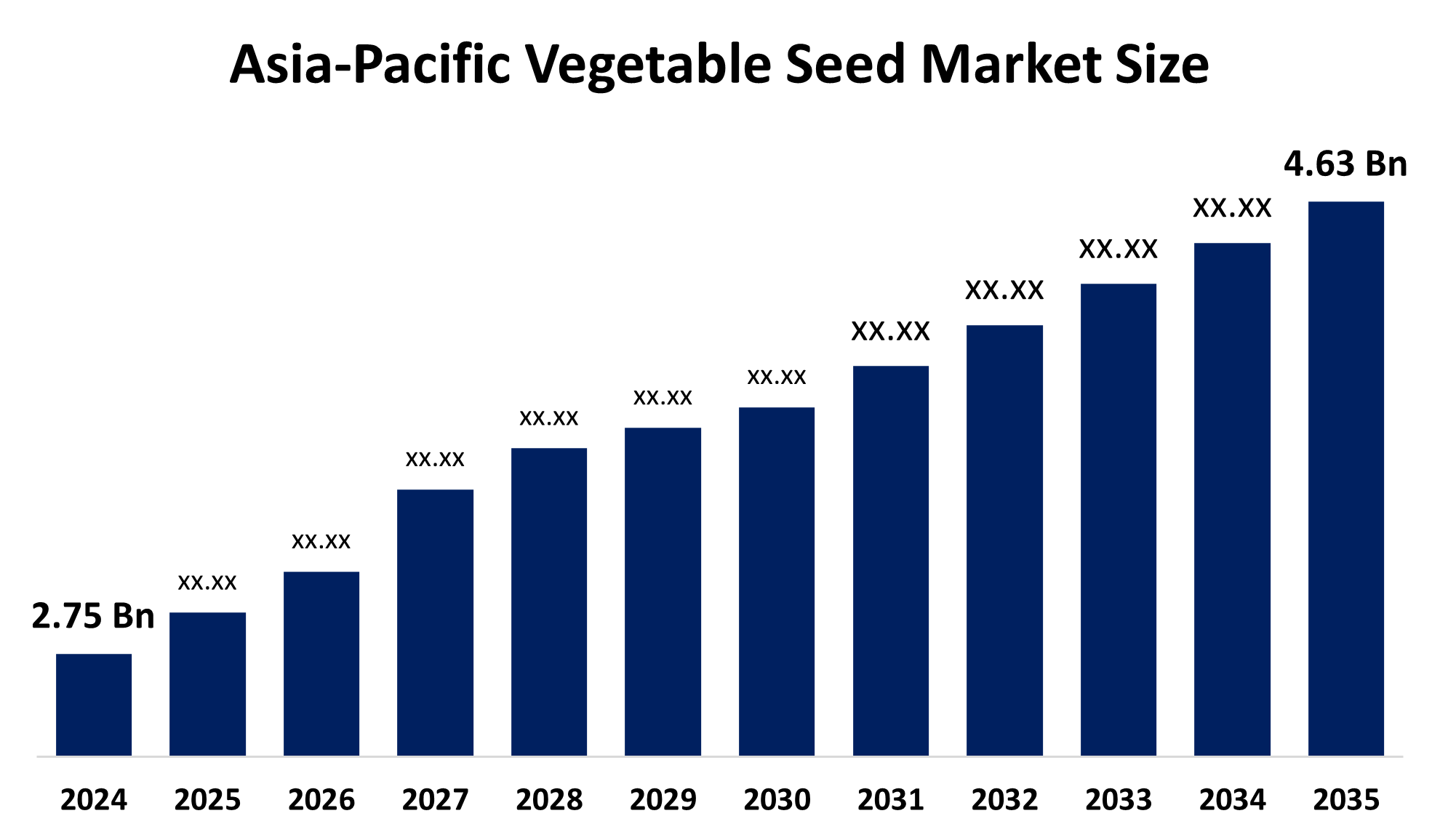
- The Asia-Pacific Vegetable Seed Market Size Was Estimated at USD 2.75 Billion in 2024
- The Market Size is Expected to Grow at a CAGR of Around 4.85 % from 2025 to 2035
- The Asia-Pacific Vegetable Seed Market Size is Expected to Reach USD 4.63 Billion by 2035
Get more details on this report -
According to a research report published by Spherical Insights & Consulting, The Asia-Pacific Vegetable Seed Market Size is Anticipated to Reach USD 4.63 Billion by 2035, Growing at a CAGR of 4.85 % from 2025 to 2035. The growing demand for high-yield hybrid varieties, the growing use of protected cultivation, the expansion of organic farming methods, the development of seed genetics technology, and the increased attention being paid to food security and sustainable agricultural productivity worldwide are all factors driving the Asia Pacific vegetable seed market's enormous opportunities.
Market Overview
The global industry that conducts research, development, production, processing, certification, marketing, and distribution of seeds used to grow vegetable crops is known as the "vegetable seed market." It includes a wide variety of seed types, including as open-pollinated, hybrid, genetically modified, and specialty seeds that are intended to improve quality, yield, resistance to disease, and adaptability to a range of agroclimatic conditions. The market supports both conventional and organic agricultural systems by catering to smallholder farmers, greenhouse operators, commercial growers, and contract farming businesses.
In March 2025, Advanta Seeds and KPAGRO launched a new sweet corn seed drying facility in Lopburi, Thailand, featuring automated intake, centralized heating, and SCADA monitoring to strengthen tropical seed production capabilities. The growing worldwide population and increased demand for wholesome, premium veggies are the main factors propelling the Asia Pacific vegetable seed market. The demand for fresh produce has increased dramatically due to growing awareness of balanced meals and health-conscious consumption patterns, which created seed innovation and distribution.
Report Coverage
This research report categorizes the market for the Asia-Pacific vegetable seed market based on various segments and regions, and forecasts revenue growth and analyses trends in each submarket. The report analyses the key growth drivers, opportunities, and challenges influencing the Asia-Pacific vegetable seed market. Recent market developments and competitive strategies, such as expansion, product launch, development, partnership, merger, and acquisition, have been included to draw the competitive landscape in the market. The report strategically identifies and profiles the key market players and analyses their core competencies in each sub-segment of the Asia-Pacific Vegetable Seed Market.
Asia-Pacific Vegetable Seed Market Report Coverage
| Report Coverage | Details |
|---|---|
| Base Year: | 2024 |
| Market Size in 2024: | USD 2.75 Billion |
| Forecast Period: | 2025-2035 |
| Forecast Period CAGR 2025-2035 : | 4.85 % |
| 2035 Value Projection: | USD 4.63 Billion |
| Historical Data for: | 2020-2023 |
| No. of Pages: | 195 |
| Tables, Charts & Figures: | 102 |
| Segments covered: | By Type, By Application |
| Companies covered:: | Advanta Seeds - UPL, BASF SE, Bayer AG, Bejo Zaden BV, East-West Seed, Groupe Limagrain, Rijk Zwaan Zaadteelt en Zaadhandel BV, Sakata Seeds Corporation, Syngenta Group and Other Key Playe |
| Pitfalls & Challenges: | and COVID-19 Impact Analysis |
Get more details on this report -
Driving Factors
The use of high-yielding hybrid and genetically modified seed varieties has increased in response to rapid urbanization and the reduction of arable land in an effort to increase production per hectare. Improved seed performance, disease resistance, and climate adaptability are further benefits of technological developments in plant breeding, biotechnology, and precision agriculture. The need for specialist vegetable seeds has also grown as protected production methods, such as greenhouse and polyhouse farming, have proliferated. Government programs that promote sustainable farming methods, food security, and agricultural modernization also boost the Asia-Pacific Vegetable Seed Market.
Restraining Factors
High R&D expenses, strict regulatory approvals, climate variability, fluctuating raw material prices, a lack of farmer awareness of advanced hybrids, and intellectual property issues that impact seed distribution, adoption, and profitability across regions are some of the factors restricting the Asia-Pacific Vegetable Seed Market.
Market Segmentation
The Asia-Pacific vegetable seed market share is classified into type and application.
- The organic seeds segment accounted for the largest revenue market share in 2024 and is expected to grow at a significant CAGR during the forecast period.
The Asia-Pacific Vegetable Seed Market is segmented by type into open-pollinated seeds, hybrid seeds, genetically modified seeds, organic seeds, protected cultivation seeds, and others. Among these, the organic seeds segment accounted for the largest revenue market share in 2024 and is expected to grow at a significant CAGR during the forecast period. Consumer preferences for sustainable and chemical-free produce are driving an increase in the market for organic seeds. As greenhouse and net house farming grow in urban and peri-urban regions, protected cultivation seeds are becoming more popular.
- The commercial farming segment dominated the share in 2024 and is anticipated to grow at a remarkable CAGR during the forecast period.
The Asia-Pacific Vegetable Seed Market is segmented by application into home gardening, commercial farming, research and development, seed production for export, and others. Among these, the commercial farming segment dominated the share in 2024 and is anticipated to grow at a remarkable CAGR during the forecast period. The growing demand for vegetables in both domestic and international markets has made commercial farming the most popular application category.
Competitive Analysis:
The report offers the appropriate analysis of the key organizations/companies involved within the Asia-Pacific vegetable seed market, along with a comparative evaluation primarily based on their product offering, business overviews, geographic presence, enterprise strategies, segment market share, and SWOT analysis. The report also provides an elaborate analysis focusing on the current news and developments of the companies, which includes product development, innovations, joint ventures, partnerships, mergers & acquisitions, strategic alliances, and others. This allows for the evaluation of the overall competition within the market.
List of Key Companies
- Advanta Seeds - UPL
- BASF SE
- Bayer AG
- Bejo Zaden BV
- East-West Seed
- Groupe Limagrain
- Rijk Zwaan Zaadteelt en Zaadhandel BV
- Sakata Seeds Corporation
- Syngenta Group
- Others
Key Target Audience
- Market Players
- Investors
- End-users
- Government Authorities
- Consulting and Research Firm
- Venture capitalists
- Value-Added Resellers (VARs)
Recent Developments:
- In November 2024, Crystal Crop Protection launched expansion initiatives by acquiring IB Seeds, strengthening its vegetable and flower seed portfolio, and advancing its horticulture market presence across India.
- In March 2024, Syngenta Group launched a Seed Health Lab in Hyderabad, enhancing quality testing capacity and supporting Asia-Pacific growers with advanced phytosanitary-compliant diagnostics infrastructure.
Market Segment
This study forecasts revenue at the Asia-Pacific, regional, and country levels from 2020 to 2035. Spherical Insights has segmented the Asia-Pacific Vegetable Seed Market based on the below-mentioned segments:
Asia-Pacific Vegetable Seed Market, By Type
- Open-Pollinated Seeds
- Hybrid Seeds
- Genetically Modified Seeds
- Organic Seeds
- Protected Cultivation Seeds
- Others
Asia-Pacific Vegetable Seed Market, By Application
- Home Gardening
- Commercial Farming
- Research and Development
- Seed Production for Export
- Others
Frequently Asked Questions (FAQ)
-
Q: What is the Asia-Pacific vegetable seed market size?Asia-Pacific Vegetable Seed market size is expected to grow from USD 2.75 billion in 2024 to USD 4.63 billion by 2035, growing at a CAGR of 4.85 % during the forecast period 2025-2035.
-
Q: What are the key growth drivers of the market?Rising demand for high-yield hybrid seeds, expanding protected cultivation, increasing health awareness, government agricultural support programs, technological advancements in plant breeding, and growing urbanization collectively drive Asia-Pacific vegetable seed market growth.
-
Q: What factors restrain the Asia-Pacific vegetable seed market?High hybrid seed costs, stringent regulatory approvals, climate variability, limited farmer awareness, intellectual property challenges, and price sensitivity among smallholder farmers restrain adoption and profitability in the Asia-Pacific vegetable seed market.
-
Q: How is the market segmented by type?The Asia-Pacific vegetable seed market is segmented by type into open-pollinated seeds, hybrid seeds, genetically modified seeds, organic seeds, protected cultivation seeds, and others, based on breeding technology, production methods, and cultivation requirements.
-
Q: Who are the key players in the Asia-Pacific vegetable seed market?Key players include Syngenta Group, Bayer AG, BASF SE, Groupe Limagrain, and Rijk Zwaan Zaadteelt en Zaadhandel BV, alongside strong regional breeders.
-
Q: Who are the target audiences for this market report?Target audiences include seed manufacturers, agribusiness companies, investors, research institutions, agricultural technology providers, government agencies, policy makers, distributors, and stakeholders seeking strategic insights into regional vegetable seed market trends.
Need help to buy this report?