Asia Pacific Pain Patch Market Size, Share, and COVID-19 Impact Analysis, By Type (Opioid, Non-Opioid), By Application (Pain Relief, Cough Suppression, Anesthesia, Diarrhea Suppression, Smoking Cessation), and Asia Pacific Pain Patch Market Insights, Industry Trends, Forecast to 2035
Industry: Healthcare
Asia Pacific Pain Patch Market Insights Forecasts To 2035
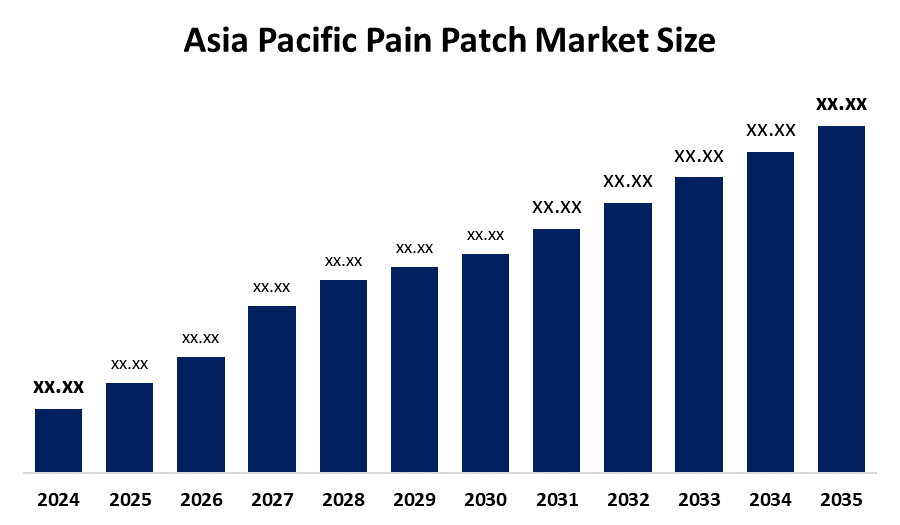
- The Asia Pacific Pain Patch Market Size Is Expected To Grow At A CAGR Of Around 4.7% From 2025 To 2035.
- The Asia Pacific Pain Patch Market Size Is Expected To Reach A Significant Share By 2035
Get more details on this report -
According To A Research Report Published By Spherical Insights & Consulting, The Asia Pacific Pain Patch Market Size Is Expected To Grow 4.7% CAGR From 2025 To 2035 Is Expected To Reach A Significant Share By 2035. The market is driven by rising chronic diseases (arthritis, diabetes), an aging population, increasing disposable income, better healthcare infrastructure, and a shift towards non-invasive, convenient pain management.
Market Overview
Asia Pacific Pain Patches Market Size Refers To The Region's Growing Industry For Adhesive Medicinal Patches Used For Pain Relief, Driven By Aging Population, Increasing Chronic Diseases, Rising Healthcare Investments And Demand For Non-Invasive, Long-Lasting And Convenient Transdermal Drug Delivery Systems For Conditions Such As Arthritis, Neuropathic Pain And Muscular Pain. Key drivers include technological advancements, improved infrastructure in countries such as China, India and Japan, and a shift toward patient-friendly, sustained-release treatments. Market opportunities in the Asia Pacific pain patches market lie in the growing demand for non-invasive pain relief driven by aging population, rising chronic diseases (arthritis, back pain), rising disposable incomes and growing healthcare infrastructure, with strong growth in China, India and Japan, particularly for non-opioid, OTC patches through online and retail pharmacies, focusing on relief from chronic pain, sports injuries and post-surgery.
Government Initiatives In The Asia-Pacific Pain Patches Market Size Focus On Promoting Local Manufacturing (Such As India's PLI Scheme For Apis), Controlling Opioid Use, Modernizing Healthcare Infrastructure and streamlining regulations, as well as encouraging innovation in non-invasive pain relief, smart patches and advanced drug delivery to meet the growing demand of chronic diseases and aging population.
Report Coverage
This Research Report Categorizes The Market Size For The Asia Pacific Pain Patch Market Based On Various Segments And Regions, And Forecasts Revenue Growth And Analyses Trends In Each Submarket. The report analyses the key growth drivers, opportunities, and challenges influencing the Asia Pacific Pain Patch market. Recent market developments and competitive strategies, such as expansion, product launch, development, partnership, merger, and acquisition have been included to draw the competitive landscape in the market. The report strategically identifies and profiles the key market players and analyses their core competencies in each sub-segment of the Asia Pacific Pain Patch market.
Asia Pacific Pain Patch Market Report Coverage
| Report Coverage | Details |
|---|---|
| Base Year: | 2024 |
| Market Size in 2024: | 4.7% |
| Forecast Period: | 2020-2023 |
| Forecast Period CAGR 2020-2023 : | 4.7% |
| 2023 Value Projection: | 4.7% |
| Historical Data for: | 2020-2023 |
| No. of Pages: | 250 |
| Tables, Charts & Figures: | 120 |
| Segments covered: | By Type By Application |
| Companies covered:: | Johnson & Johnson, Teva Pharma, Novartis, Hisamitsu Pharmaceutical (Salonpas), Nitto Denko, Viatris, Luye Pharma, Amneal, and Others,Key Players |
| Pitfalls & Challenges: | COVID-19 Empact, Challenge, Future, Growth, & Analysis |
Get more details on this report -
Driving Factors
The Asia-Pacific Pain Patches Market Size Is Driven By Aging Population, Increasing Chronic Diseases (Diabetes, Arthritis), Demand For Non-Invasive, Convenient Drug Delivery and improved healthcare infrastructure, technological advancements such as smart patches and microneedles have fueled the growth by offering better compliance and targeted, long-lasting relief.
Restraining Factors
The Asia-Pacific Pain Patch Market Size Faces Several Restraining Factors, Including Challenges Related To Drug Permeability, Potential Skin Irritation, Intense Competition From Established Oral Medications and alternative therapies, and navigating complex regulatory landscapes.
Market Segmentation
The Asia Pacific pain patch market share is categorised into type and application.
- The non-opioid segment accounted for the largest revenue market share in 2024 and is expected to grow at a significant CAGR during the forecast period.
The Asia Pacific Pain Patch Market Size Is Segmented By Type Into Opioid, Non-Opioid. Among these, the non-opioid segment accounted for the largest revenue market share in 2024 and is expected to grow at a significant CAGR during the forecast period. It is driven by rising chronic pain, aging populations, and strict regulations against opioids, pushing demand for safer, effective alternatives like NSAIDs (e.g., diclofenac, lidocaine) for arthritis, back pain, and muscle soreness, with increasing access via e-commerce further fueling growth.
- The pain relief segment accounted for the largest revenue market share in 2024 and is expected to grow at a significant CAGR during the forecast period.
The Asia Pacific Pain Patch Market Size Is Segmented By Application Into Pain Relief, Cough Suppression, Anesthesia, Diarrhea Suppression, Smoking Cessation. Among these, the Pain Relief segment accounted for the largest revenue market share in 2024 and is expected to grow at a significant CAGR during the forecast period. It is driven by the region's large geriatric population, rising chronic pain prevalence (lifestyle-related issues), and increased healthcare spending, with China leading, while advancements in lidocaine and capsaicin patches, along with broader awareness of opioid alternatives, fuel this growth. Other applications like cough suppression or anesthesia, while present, don't match the scale of pervasive pain management needs.
Competitive Analysis:
The Report Offers The Appropriate Analysis Of The Key Organizations/Companies Involved Within The Asia Pacific Pain Patch Market Size, along with a comparative evaluation primarily based on their product offering, business overviews, geographic presence, enterprise strategies, segment market share, and SWOT analysis. The report also provides an elaborate analysis focusing on the current news and developments of the companies, which includes product development, innovations, joint ventures, partnerships, mergers & acquisitions, strategic alliances, and others. This allows for the evaluation of the overall competition within the market.
List of Key Companies
- Johnson & Johnson
- Teva Pharma
- Novartis
- Hisamitsu Pharmaceutical (Salonpas)
- Nitto Denko
- Viatris
- Luye Pharma
- Amneal
- Others
Key Target Audience
- Market Players
- Investors
- End-users
- Government Authorities
- Consulting and Research Firm
- Venture capitalists
- Value-Added Resellers (VARs)
Market Segment
This study forecasts revenue at the Asia Pacific, regional, and country levels from 2020 to 2035. Spherical Insights has segmented the Asia Pacific pain patch market based on the below-mentioned segments:
Asia Pacific Pain Patch Market, By Type
- Opioid
- Non-Opioid
Asia Pacific Pain Patch Market, By Application
- Pain Relief
- Cough Suppression
- Anesthesia
- Diarrhea Suppression
- Smoking Cessation
Frequently Asked Questions (FAQ)
-
What is Pain Patch, and its primary use?pain patch, or transdermal analgesic patch, is a medicated adhesive patch applied to the skin to deliver pain-relieving medication through the skin and into the bloodstream or local tissue.
-
What are the key growth drivers of the market?The Asia-Pacific pain patches market is driven by aging population, increasing chronic diseases (diabetes, arthritis), demand for non-invasive, convenient drug delivery and improved healthcare infrastructure, technological advancements such as smart patches and microneedles have fueled the growth by offering better compliance and targeted, long-lasting relief.
-
What factors restrain the Asia Pacific Pain Patch market?The Asia-Pacific pain patch market faces several restraining factors, including challenges related to drug permeability, potential skin irritation, intense competition from established oral medications and alternative therapies, and navigating complex regulatory landscapes.
-
How is the market segmented by type?The market is segmented into Opioid, Non-Opioid
Need help to buy this report?