Asia Pacific Healthcare Biometrics Market Size, Share, and COVID-19 Impact Analysis, By Technology (Fingerprint Recognition, Voice Recognition, Hand Recognition, Vein Recognition, Iris Recognition, Face Recognition and Others), By Application (Medical Record & Data Center Security, Patient Identification & Tracking, Care Provider Authentication, Remote Patient Monitoring, and Others), Asia Pacific Healthcare Biometrics Market Insights, Industry Trends, Forecast to 2035
Industry: Healthcare
Asia Pacific Healthcare Biometrics Market Insights Forecasts to 2035
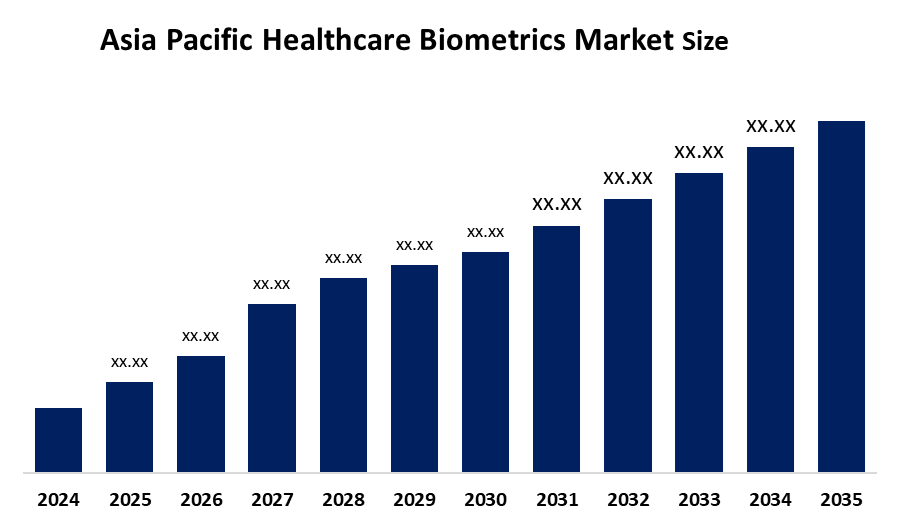
- The Asia Pacific Healthcare Biometrics Market Size Is Expected to Grow at a CAGR of Around 6.1% from 2025 to 2035.
- The Asia Pacific Healthcare Biometrics Market Size Is Expected to Reach a Significant Share by 2035
Get more details on this report -
According to a research report published by Spherical Insights & Consulting, The Asia Pacific Healthcare Biometrics Market Size is Expected to Grow 6.1% CAGR from 2025 to 2035 is expected to reach a significant share by 2035. The market is driven by experiencing rapid growth, driven by increasing digital health adoption, government initiatives (like India's ABDM, China's Healthy China 2030), rising patient safety concerns, and the need for secure patient identification to prevent fraud and manage large populations, with India and China leading adoption, leveraging technologies like fingerprint, facial, iris scans, and AI for efficient, secure healthcare delivery, particularly in telemedicine and electronic health records.
Market Overview
Healthcare biometrics refers to the use of unique biological traits such as fingerprints, facial recognition, iris patterns, or behavioral traits to identify and authenticate individuals within medical environments. The market is characterized by a shift toward automated identity verification and the integration of advanced technologies like AI to improve accuracy and speed. Current trends highlight an increasing move toward contactless solutions (facial and iris recognition) due to hygiene concerns and the rise of multimodal systems that combine multiple traits for enhanced security.
Government initiatives are a major growth driver, with programs like India’s Aadhaar linking biometric data to healthcare and welfare services. Other regional efforts include Indonesia’s e-KTP electronic ID program and national health assurance missions aimed at digitizing medical records. In the private sector, companies are forming strategic partnerships, such as collaborations between digital ID firms and healthcare networks, to provide secure digital proofs for vaccinations and medical credentials.
Technological progress in the region is marked by the integration of Artificial Intelligence (AI) and Machine Learning (ML) to enhance recognition algorithms and reduce false rejection rates. Innovations like the world's smallest palm vein sensors and AI-powered liveness detection help prevent spoofing and deepfake threats. Additionally, the growth of mobile biometrics and cloud-integrated solutions is enabling secure authentication for telemedicine and remote patient monitoring across the Asia-Pacific.
Report Coverage
This research report categorizes the market for the Asia Pacific healthcare biometrics market based on various segments and regions, and forecasts revenue growth and analyses trends in each submarket. The report analyses the key growth drivers, opportunities, and challenges influencing the Asia Pacific healthcare biometrics market. Recent market developments and competitive strategies, such as expansion, product launch, development, partnership, merger, and acquisition have been included to draw the competitive landscape in the market. The report strategically identifies and profiles the key market players and analyses their core competencies in each sub-segment of the Asia Pacific healthcare biometrics market.
Asia Pacific Healthcare Biometrics Market Report Coverage
| Report Coverage | Details |
|---|---|
| Base Year: | 2024 |
| Forecast Period: | 2025-2035 |
| Forecast Period CAGR 2025-2035 : | 6.1% CAGR |
| Historical Data for: | 2020-2023 |
| No. of Pages: | 210 |
| Tables, Charts & Figures: | 90 |
| Segments covered: | By Technology |
| Companies covered:: | NEC Corporation, Fujitsu Limited, Hitachi Ltd., Goodix Technology Inc., Suprema Inc., IDEMIA, Morpho, 3M Cogent, Inc., Imprivata, Inc., BIO-key International, and Other key players |
| Pitfalls & Challenges: | COVID-19 Empact, Challenge, Future, Growth, & Analysis |
Get more details on this report -
Driving Factors
The market is primarily driven by the rising need for secure medical data management and the growing incidence of healthcare fraud and identity theft. Increased government support for digital health initiatives and the expansion of healthcare infrastructure in emerging economies like India and China are also significant catalysts. Furthermore, the adoption of contactless biometric systems in response to post-pandemic hygiene standards and the integration of biometric authentication into mobile health platforms are boosting regional growth.
Restraining Factors
Market growth is hindered by high installation and costs associated with advanced biometric hardware and software. Concerns regarding the security of sensitive biometric data and potential privacy breaches act as a deterrent for many healthcare facilities. Additionally, technical challenges such as system integration complexities and a lack of skilled professionals to manage these systems in remote areas pose significant barriers to widespread market adoption.
Market Segmentation
The Asia Pacific healthcare biometrics market share is categorised into technology and application.
- The fingerprint recognition segment accounted for the largest revenue market share in 2024 and is expected to grow at a significant CAGR during the forecast period.
The Asia Pacific healthcare biometrics market is segmented by technology into fingerprint recognition, voice recognition, hand recognition, vein recognition, iris recognition, face recognition and others. Among these, the fingerprint recognition segment accounted for the largest revenue market share in 2024 and is expected to grow at a significant CAGR during the forecast period. The growth of the segment is driven by its highly reliable and easily accessible nature, making it one of the most widely adopted biometric systems. The fingerprint collection is highly secure and accurate due to the fingerprint recognition system. The small-scale and healthcare industries' growth has brought about a higher demand for these systems.
- The patient identification & tracking segment accounted for the largest revenue market share in 2024 and is expected to grow at a significant CAGR during the forecast period.
The Asia Pacific healthcare biometrics market is segmented by application into medical record & data center security, patient identification & tracking, care provider authentication, remote patient monitoring, and others. Among these, the patient identification & tracking segment accounted for the largest revenue market share in 2024 and is expected to grow at a significant CAGR during the forecast period. The growth of the segment is driven by the increasing recognition and application of biometric systems in medication and other industries. Biometrics are reliable and safe patient identification data that is then used for correct monitoring and improved medical decision-making. In addition, biometric technology prevents tampering of patient data and unauthorized access to the system.
Competitive Analysis:
The report offers the appropriate analysis of the key organizations/companies involved within the Asia Pacific healthcare biometrics market, along with a comparative evaluation primarily based on their product offering, business overviews, geographic presence, enterprise strategies, segment market share, and SWOT analysis. The report also provides an elaborate analysis focusing on the current news and developments of the companies, which includes product development, innovations, joint ventures, partnerships, mergers & acquisitions, strategic alliances, and others. This allows for the evaluation of the overall competition within the market.
List of Key Companies
- NEC Corporation
- Fujitsu Limited
- Hitachi Ltd.
- Goodix Technology Inc.
- Suprema Inc.
- IDEMIA
- Morpho
- 3M Cogent, Inc.
- Imprivata, Inc.
- BIO-key International
- Others
Key Target Audience
- Market Players
- Investors
- End-users
- Government Authorities
- Consulting and Research Firm
- Venture capitalists
- Value-Added Resellers (VARs)
Market Segment
This study forecasts revenue at the Asia Pacific, regional, and country levels from 2020 to 2035. Spherical Insights has segmented the Asia Pacific healthcare biometrics market based on the below-mentioned segments:
Asia Pacific Healthcare Biometrics Market, By Technology
- Fingerprint Recognition
- Voice Recognition
- Hand Recognition
- Vein Recognition
- Iris Recognition
- Face Recognition
- Others
Asia Pacific Healthcare Biometrics Market, By Application
- Medical Record & Data Center Security
- Patient Identification & Tracking
- Care Provider Authentication
- Remote Patient Monitoring
- Others
Frequently Asked Questions (FAQ)
-
What is the Asia Pacific healthcare biometrics market size?The Asia Pacific healthcare biometrics market size is expected to grow 6.1% CAGR from 2025 to 2035 is expected to reach a significant share by 2035
-
What are the key growth drivers of the market?The market is primarily driven by the rising need for secure medical data management and the growing incidence of healthcare fraud and identity theft. Increased government support for digital health initiatives and the expansion of healthcare infrastructure in emerging economies like India and China are also significant catalysts. Furthermore, the adoption of contactless biometric systems in response to post-pandemic hygiene standards and the integration of biometric authentication into mobile health platforms are boosting regional growth.
-
What factors restrain the Asia Pacific healthcare biometrics market?Market growth is hindered by high installation and maintenance costs associated with advanced biometric hardware and software. Concerns regarding the security of sensitive biometric data and potential privacy breaches act as a deterrent for many healthcare facilities. Additionally, technical challenges such as system integration complexities and a lack of skilled professionals to manage these systems in remote areas pose significant barriers to widespread market adoption
-
How is the market segmented by technology?The market is segmented into fingerprint recognition, voice recognition, hand recognition, vein recognition, iris recognition, face recognition and others.
Need help to buy this report?