Asia Pacific Fast Fashion Market Size, Share, and COVID-19 Impact Analysis, By Product Type (Apparel, Accessories, Footwear, and Others), By End User (Men, Women, Children, and Unisex), By Distribution Channel (Online, Offline and Others), and Asia Pacific Fast Fashion Market Insights Forecasts to 2035
Industry: Consumer Goods
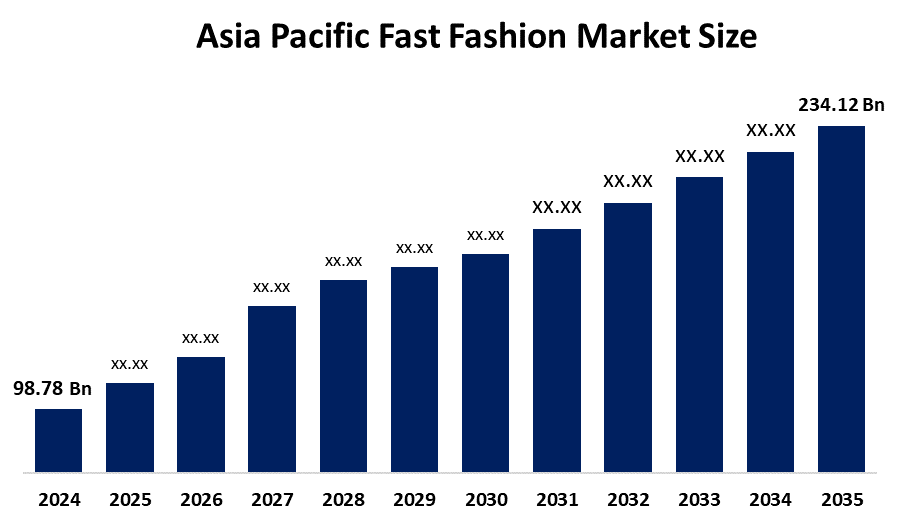
- The Asia Pacific Fast Fashion Market Size Was Estimated at USD 98.78 Billion in 2024
- The Market Size is Expected to Grow at a CAGR of Around 8.16% from 2025 to 2035
- The Asia Pacific Fast Fashion Market Size is Expected to Reach USD 234.12 Billion by 2035
Get more details on this report -
According to a research report published by Spherical Insights & Consulting, The Asia Pacific Fast Fashion Market size is anticipated to reach USD 234.12 Billion by 2035, Growing at a CAGR of 8.16% from 2025 to 2035. The market is driven by the rapid production, selling a large quantity and consumers' impulse to purchase, which, in turn, is dependent on altering consumer preferences, an increase in available money for spending, and the growth of the online shopping market.
Market Overview
Fast fashion signifies the uninterrupted offering of fresh designs at extremely low prices. Its emergence has been a major factor in the overconsumption of clothes, which has been largely influenced by social media, and the industry is introducing fashion trends to consumers at a speed higher than ever before. It has brought about tremendous increases in the volume of clothes produced and thrown away. Fast Fashion implies keeping abreast of the trends, low prices, and an uninterrupted influx of new products in retail stores. Besides, this is as a result of shifting buyer preferences, increasing disposable incomes, and the expansion of online shopping.
Across the Asia Pacific Union, the number of businesses engaged in textile as well as clothing manufacturing has been changing over the years from 2009 to 2022. The textile and clothing manufacturers total numbered to 197,000 in 2022.
The digital marketplace provides ways to rapidly release products, easy access, and instant interaction with customers. Companies are using AI in the areas of trend prediction, stock management, and individual marketing, which results in higher operational effectiveness and better customer interaction. The need for clothes made from ethical sources and eco-friendly options is on the rise.
Report Coverage
This research report categorizes the market for the Asia Pacific fast fashion market based on various segments and regions, and forecasts revenue growth and analyses trends in each submarket. The report analyses the key growth drivers, opportunities, and challenges influencing the Asia Pacific fast fashion market. Recent market developments and competitive strategies, such as expansion, product launch, development, partnership, merger, and acquisition have been included to draw the competitive landscape in the market. The report strategically identifies and profiles the key market players and analyses their core competencies in each sub-segment of the Asia Pacific fast fashion market.
Asia Pacific Fast Fashion Market Report Coverage
| Report Coverage | Details |
|---|---|
| Base Year: | 2024 |
| Market Size in 2024: | USD 98.78 Billion |
| Forecast Period: | 2024-2035 |
| Forecast Period CAGR 2024-2035 : | CAGR of 8.16% |
| 2035 Value Projection: | USD 234.12 Billion |
| Historical Data for: | 2020-2023 |
| No. of Pages: | 220 |
| Tables, Charts & Figures: | 95 |
| Segments covered: | By Product Type, By End User |
| Companies covered:: | Inditex (Zara), H&M, Fast Retailing (Uniqlo), Aditya Birla Fashion, Penshoppe, Alibaba, Flipkart, And Other Players, and |
| Pitfalls & Challenges: | COVID-19 Empact, Challenges, Future, Growth, & Analysis |
Get more details on this report -
Driving Factors
The fast fashion market in Asia Pacific is driven by growing demand among consumers for inexpensive and fashionable apparel. By adopting sustainable sourcing and manufacturing practices, including the utilization of organic cotton and recycled materials, brands aim to minimize their carbon footprint. The Asia Pacific households saved quite a lot in 2025; thus, they were left with just about 12.7% of their disposable income. A staggering 77% of Asia Pacifican shoppers showed curiosity about luxury sustainable products in 2023, and more than half would not mind paying a 10% price increase for green products. Zara, H&M, and Mango are always on the lookout for new tactics to differentiate their brand from the others, such as launching exclusive lines, partnering with bloggers, and offering custom shopping experiences.
Restraining Factors
The fast fashion market in Asia Pacific is restrained by the issue of fake products are widespread, which leads to the division of the market into smaller units. This situation creates an uneven playing field, different price levels, and the decline of market share for the big brands. More and more people are taking into account the ecological footprint of their fashion choices. Also, the growth of e-commerce and the power of social media have turned consumers into very knowledgeable and selective ones.
Market Segmentation
The Asia Pacific fast fashion market share is categorised into product type, end user and distribution channel.
- The apparel segment accounted for the largest revenue market share in 2024 and is expected to grow at a significant CAGR during the forecast period.
The Asia Pacific fast fashion market is segmented by product type into apparel, accessories, footwear, and others. Among these, the apparel segment accounted for the largest revenue market share in 2024 and is expected to grow at a significant CAGR during the forecast period. The segment growth is driven by a large number of people who care about looking good and having a good budget; thus, there is a constant need for modern clothes all over the continent. the supply consists of many different kinds of clothes that are fashion-forward and also cheap, so that everyone can buy them.
- The women segment dominated the market in 2024 and is projected to grow at a substantial CAGR during the forecast period.
Based on end user, the Asia Pacific fast fashion market is segmented into men, women, children, and unisex. Among these, the women segment dominated the market in 2024 and is projected to grow at a substantial CAGR during the forecast period. The growth of the segment is driven by the main and leading consumer of fashion products are women, whose preferences and buying habits basically determine the trends and demand in the market. Women not only buy clothes according to the latest trends but also actively seek out outfits that are both stylish and cheap. The impact of women goes further than just their purchases; they usually are the ones setting the trends in their social groups, thus affecting the fashion choices of their friends and relatives.
- The offline segment accounted for the largest revenue market share in 2024 and is expected to grow at a significant CAGR during the forecast period.
The Asia Pacific fast fashion market is segmented by distribution channel into online, offline and others. Among these, the offline segment accounted for the largest revenue market share in 2024 and is expected to grow at a significant CAGR during the forecast period. The segment growth is driven by the increasing acceptance of online shopping has been a factor in the strategies of fast fashion brands to establish connections with customers and display their products, but still visit physical retail locations as an indispensable part of their strategy. Through these stores, customers can feel the mood of the brand, to fit the wear, and to receive assistance from the skilled sales staff.
Competitive Analysis:
The report offers the appropriate analysis of the key organizations/companies involved within the Asia Pacific fast fashion market, along with a comparative evaluation primarily based on their product offering, business overviews, geographic presence, enterprise strategies, segment market share, and SWOT analysis. The report also provides an elaborate analysis focusing on the current news and developments of the companies, which includes product development, innovations, joint ventures, partnerships, mergers & acquisitions, strategic alliances, and others. This allows for the evaluation of the overall competition within the market.
List of Key Companies
- Inditex (Zara)
- H&M
- Fast Retailing (Uniqlo)
- Aditya Birla Fashion
- Penshoppe
- Alibaba
- Flipkart
- Others
Key Target Audience
- Market Players
- Investors
- End-users
- Government Authorities
- Consulting and Research Firm
- Venture capitalists
- Value-Added Resellers (VARs)
Market Segment
This study forecasts revenue at the Asia Pacific, regional, and country levels from 2020 to 2035. Spherical Insights has segmented the Asia Pacific Fast Fashion Market based on the below-mentioned segments:
Asia Pacific Fast Fashion Market, By Product Type
- Apparel
- Accessories
- Footwear
- Others
Asia Pacific Fast Fashion Market, By End User
- Men
- Women
- Children
- Unisex
Asia Pacific Fast Fashion Market, By Distribution Channel
- Online
- Offline
- Others
Frequently Asked Questions (FAQ)
-
Q: What is the Asia Pacific fast fashion market size?A: Asia Pacific Fast Fashion market size is expected to grow from USD 98.78 billion in 2024 to USD 234.12 billion by 2035, growing at a CAGR of 8.16% during the forecast period 2025-2035.
-
Q: What is fast fashion, and their primary use?A: Fast fashion signifies the uninterrupted offering of fresh designs at extremely low prices. Its emergence has been a major factor in the overconsumption of clothes, which has been largely influenced by social media, and the industry is introducing fashion trends to consumers at a speed higher than ever before. It has brought about tremendous increases in the volume of clothes produced and thrown away.
-
Q: What are the key growth drivers of the market?A: Market growth is driven by growing demand among consumers for inexpensive and fashionable apparel. By adopting sustainable sourcing and manufacturing practices, including the utilization of organic cotton and recycled materials, brands aim to minimize their carbon footprint. The Asia Pacific households saved quite a lot in 2025; thus, they were left with just about 12.7% of their disposable income.
-
Q: What factors restrain the Asia Pacific fast fashion market?A: The market is restrained by the issue of fake products are widespread, which leads to the division of the market into smaller units. This situation creates an uneven playing field, different price levels, and the decline of market share for the big brands. More and more people are taking into account the ecological footprint of their fashion choices.
-
Q: How is the market segmented by distribution channel?A: The market is segmented into online, offline and others
Need help to buy this report?