Asia Pacific Cold Chain Market Size, Share, and COVID-19 Impact Analysis, By Service Type (Refrigerated Storage, Refrigerated Transport), By Temperature (Chilled, Frozen), By End User (Meat and Seafood, Fruits and Vegetables, Bakery and Confectionery, Dairy and Frozen Products, Pharmaceuticals, and Others), and Asia Pacific Cold Chain Market Insights Forecasts to 2035
Industry: Information & Technology
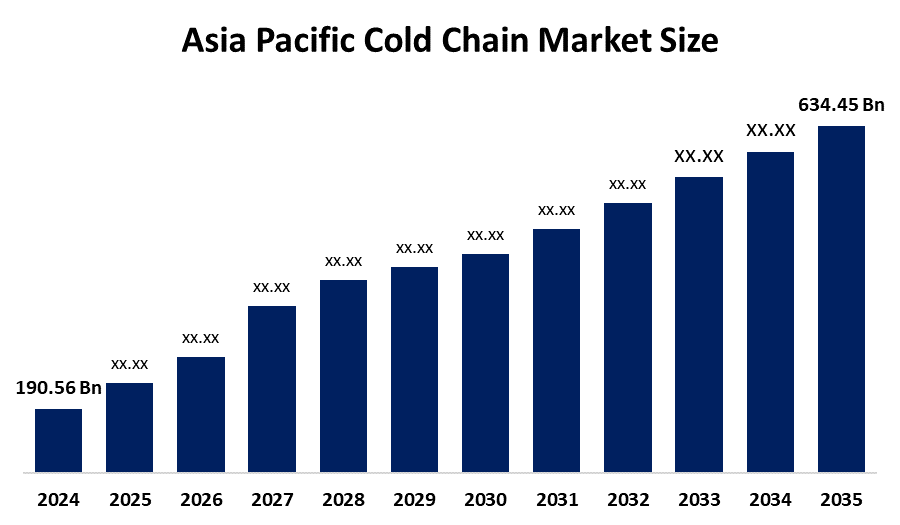
- The Asia Pacific Cold Chain Market Size Was Estimated at USD 190.56 Billion in 2024
- The Market Size is Expected to Grow at a CAGR of Around 11.55% from 2025 to 2035
- The Asia Pacific Cold Chain Market Size is Expected to Reach USD 634.45 Billion by 2035
Get more details on this report -
According to a research report published by Spherical Insights & Consulting, the Asia Pacific Cold Chain Market size is anticipated to reach USD 634.45 billion by 2035, growing at a CAGR of 11.55% from 2025 to 2035. The market is driven by the growth of temperature-sensitive product trade, the increasing demand of the pharmaceutical and healthcare sectors, and the spread of e-commerce and online grocery delivery services.
Market Overview
Cold chain indicates a regulated temperature environment system during transportation, storage, and handling of temperature-sensitive items, including food, drugs, and vaccines, until they reach the consumer. The Asia-Pacific cold chain market is growing rapidly, the fastest growing globally, driven by huge population, rising incomes, urbanization and demand for fresh food/pharma, projected to reach hundreds of billions by 2030, led by China and India, which are focusing on technology (IoT, automation) and sustainable practices to reduce post-harvest losses and enhance delivery from farms to consumers. The Asia-Pacific cold chain market offers huge opportunities due to rising incomes, e-commerce growth (especially online groceries), and demand for fresh/frozen foods, as well as pharma's growing needs for vaccines/biologics, creating demand for modern warehousing, smart technology (IoT/AI), automation, and sustainable solutions, especially in key markets such as China and India, with the potential for expansion in rural areas.
Governments in Asia-Pacific are promoting cold chain development through large-scale infrastructure investments, subsidies and policy support for food security and healthcare, with India's national cold chain grid and food processing schemes, China's state-supported projects and the Philippines' logistics hubs focusing on modernizing storage, transportation and reducing waste due to growing demand for vaccines, biopharmaceuticals and safe food. The initiative emphasizes digitalization, energy efficiency and sustainability (ESG) to meet strict regulations and consumer demands for food safety.
Report Coverage
This research report categorizes the market for the Asia Pacific Cold Chain Market Size based on various segments and regions, and forecasts revenue growth and analyses trends in each submarket. The report analyses the key growth drivers, opportunities, and challenges influencing the Asia Pacific cold chain market. Recent market developments and competitive strategies, such as expansion, product launch, development, partnership, merger, and acquisition have been included to draw the competitive landscape in the market. The report strategically identifies and profiles the key market players and analyses their core competencies in each sub-segment of the Asia Pacific cold chain market.
Asia Pacific Cold Chain Market Report Coverage
| Report Coverage | Details |
|---|---|
| Base Year: | 2024 |
| Market Size in 2024: | USD 190.56 Billion |
| Forecast Period: | 2024-2035 |
| Forecast Period CAGR 2024-2035 : | CAGR of 11.55% |
| 2035 Value Projection: | USD 634.45 Billion |
| Historical Data for: | 2020–2023 |
| No. of Pages: | 210 |
| Tables, Charts & Figures: | 106 |
| Segments covered: | By Service Type, By End User |
| Companies covered:: | DHL, Kuehne + Nagel, Lineage Logistics, Americold, UPS, Nichirei, Yamato Holdings, SF Express, JWD Group, Nippon Express, and Other Key Players |
| Pitfalls & Challenges: | COVID-19 Empact, Challenge, Future, Growth, & Analysis |
Get more details on this report -
Driving Factors
The Asia Pacific Cold Chain Market Size is booming due to increasing demand for temperature-sensitive food and pharma products due to urbanization, growing middle class, and e-commerce. Key drivers include government initiatives for infrastructure (e.g. National Logistics Policy of India), growing food safety concerns, shifting consumer preferences towards fresh/frozen goods and rapid technology adoption (IoT, AI) for better efficiency and traceability.
Restraining Factors
The Asia Pacific Cold Chain Market Size is growing rapidly, driven by increasing demand for perishable goods (food, pharma), e-commerce growth, urbanization and government support, but faces challenges such as high initial costs, infrastructure gaps in rural areas, technological integration issues and environmental concerns, while innovations such as IoT, sustainability and traceability (block chain) offer solutions and future growth.
Market Segmentation
The Asia Pacific Cold Chain Market share is categorised into service type, temperature, and end user.
- The refrigerated storage segment accounted for the largest revenue market share in 2024 and is expected to grow at a significant CAGR during the forecast period.
The Asia Pacific Cold Chain Market Size is segmented by service type into refrigerated storage, refrigerated transport. Among these, the refrigerated storage segment accounted for the largest revenue market share in 2024 and is expected to grow at a significant CAGR during the forecast period. The segment is expected to grow the storage portion responsible for the major part of 60.0% in 2024. It is the cold chain storage service which is gradually growing as companies are more and more investing in new temperature-controlled buildings that are automated and have digital monitoring systems.
- The chilled segment dominated the market in 2024 and is projected to grow at a substantial CAGR during the forecast period.
Based on temperature, the Asia Pacific Cold Chain Market Size is segmented into chilled, frozen. Among these, the chilled segment dominated the market in 2024 and is projected to grow at a substantial CAGR during the forecast period. Market growth in chilled storage is identified as the storage of items under controlled conditions at a temperature which is between the freezing point and room temperature. It is a solution for those goods that need a constant but cool temperature supply, for example, fruits, vegetables, milk products, and soft drinks.
- The meat and seafood segment accounted for the largest revenue market share in 2024 and is expected to grow at a significant CAGR during the forecast period.
The Asia Pacific Cold Chain Market Size is segmented by end user into meat and seafood, fruits and vegetables, bakery and confectionery, dairy and frozen products, pharmaceuticals, and others. Among these, the meat and seafood segment accounted for the largest revenue market share in 2024 and is expected to grow at a significant CAGR during the forecast period. The very high demand for these perishable products and the requirement for specific temperatures is expected to result in a very serious situation. One of the most important aspects of the cold chain system is that it provides the meat and seafood industries with the ability to maintain the proper standards of the products, increase their lifespan, and ensure that the food is safe.
Competitive Analysis:
The report offers the appropriate analysis of the key organizations/companies involved within the Asia Pacific Cold Chain Market Size, along with a comparative evaluation primarily based on their product offering, business overviews, geographic presence, enterprise strategies, segment market share, and SWOT analysis. The report also provides an elaborate analysis focusing on the current news and developments of the companies, which includes product development, innovations, joint ventures, partnerships, mergers & acquisitions, strategic alliances, and others. This allows for the evaluation of the overall competition within the market.
List of Key Companies
- DHL
- Kuehne + Nagel
- Lineage Logistics
- Americold
- UPS
- Nichirei
- Yamato Holdings
- SF Express
- JWD Group
- Nippon Express
- Others
Key Target Audience
- Market Players
- Investors
- End-users
- Government Authorities
- Consulting and Research Firm
- Venture capitalists
- Value-Added Resellers (VARs)
Market Segment
This study forecasts revenue at the Asia Pacific, regional, and country levels from 2020 to 2035. Spherical Insights has segmented the Asia Pacific Cold Chain Market Size based on the below-mentioned segments:
Asia Pacific Cold Chain Market, By Service Type
- Refrigerated Storage
- Refrigerated Transport
Asia Pacific Cold Chain Market, By Temperature
- Chilled
- Frozen
Asia Pacific Cold Chain Market, By End User
- Meat and Seafood
- Fruits and Vegetables
- Bakery and Confectionery
- Dairy and Frozen Products
- Pharmaceuticals
- Others
Frequently Asked Questions (FAQ)
-
Q: What is the Asia Pacific cold chain market size?A: The Asia Pacific Cold Chain Market size is expected to grow from USD 190.56 billion in 2024 to USD 634.45 billion by 2035, growing at a CAGR of 11.55% during the forecast period 2025-2035
-
Q: What is a cold chain, and its primary use?A: Cold chain indicates a regulated temperature environment system during transportation, storage, and handling of temperature-sensitive items, including food, drugs, and vaccines, until they reach the consumer.
-
Q: What factors restrain the Asia Pacific cold chain market?A: The Asia Pacific cold chain market is growing rapidly, driven by increasing demand for perishable goods (food, pharma), e-commerce growth, urbanization and government support, but faces challenges such as high initial costs, infrastructure gaps in rural areas, technological integration issues and environmental concerns, while innovations such as IoT, sustainability and traceability (block chain) offer solutions and future growth.
-
Q: How is the market segmented by service type?A: The market is segmented into refrigerated storage, refrigerated transport
Need help to buy this report?