Asia Pacific Breast Cancer Imaging Market Size, Share, and COVID-19 Impact Analysis, By Technology (Ionizing, Non-ionizing), By Product (Systems, Software), and Asia Pacific Breast Cancer Imaging Market Insights, Industry Trends, Forecast to 2035.
Industry: Healthcare
Asia Pacific Breast Cancer Imaging Market Insights Forecasts to 2035
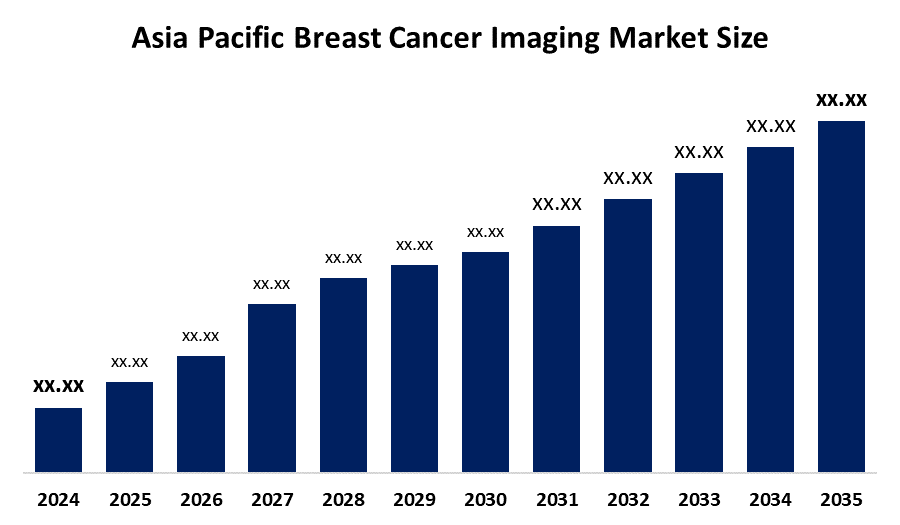
- The Asia Pacific Breast Cancer Imaging Market Size Is Expected to Grow at a CAGR of Around 5.78% from 2025 to 2035.
- The Asia Pacific Breast Cancer Imaging Market Size Is Expected to Reach a Significant Share by 2035
Get more details on this report -
According to a research report published by Spherical Insights & Consulting, the Asia Pacific breast cancer imaging market size is anticipated to reach USD 15,285.2 Million by 2035, growing at a CAGR of 20.85% from 2025 to 2035. The market is driven by rising breast cancer incidence, increased awareness, and expanding healthcare infrastructure, with projections showing significant revenue increases through 2035.
Market Overview
The Asia-Pacific breast cancer imaging market comprises the growing demand, sales and adoption of technologies such as mammography, ultrasound and MRI for breast cancer detection in countries such as China, India, Japan and Australia, driven by rising incidence rates, growing awareness, government initiatives and high healthcare expenditure, making it the fastest growing regional market for early detection and diagnosis. The market opportunities in the Asia-Pacific breast cancer imaging market are growing rapidly due to rising incidence of breast cancer, rising awareness, increasing healthcare expenditure and rapid adoption of advanced technology such as AI-integrated digital/3D mammography, ultrasound and MRI, especially in large economies such as China, India, Japan and Australia, leading to significant growth for innovative solutions despite high equipment costs.
Governments across the Asia-Pacific (APAC) region are driving the breast cancer imaging market through targeted screening programs, increased healthcare spending, and the adoption of advanced technologies like AI-assisted diagnostics and mobile mammography units. These initiatives aim for earlier detection and improved treatment outcomes.
Report Coverage
This research report categorizes the market for the Asia Pacific breast cancer imaging market based on various segments and regions, and forecasts revenue growth and analyses trends in each submarket. The report analyses the key growth drivers, opportunities, and challenges influencing the Asia Pacific breast cancer imaging market. Recent market developments and competitive strategies, such as expansion, product launch, development, partnership, merger, and acquisition have been included to draw the competitive landscape in the market. The report strategically identifies and profiles the key market players and analyses their core competencies in each sub-segment of the Asia Pacific breast cancer imaging market.
Asia Pacific Breast Cancer Imaging Market Report Coverage
| Report Coverage | Details |
|---|---|
| Base Year: | 2024 |
| Forecast Period: | 2025-2035 |
| Forecast Period CAGR 2025-2035 : | CAGR of 5.78% |
| Historical Data for: | 2020-2023 |
| No. of Pages: | 222 |
| Tables, Charts & Figures: | 162 |
| Segments covered: | By Technology, By Product |
| Companies covered:: | Fujifilm GE Healthcare Siemens Healthineers Others |
| Pitfalls & Challenges: | COVID-19 Empact, Challenge, Future, Growth, & Analysis |
Get more details on this report -
Driving Factors
Key drivers include lifestyle changes increasing cancer rates, government initiatives, and strong investments in advanced technologies like digital mammography, AI-powered systems, and ultrasound, with India and China leading the surge in demand and adoption
Restraining Factors
The primary restraining factors in the Asia Pacific breast cancer imaging market revolve around the high costs associated with advanced technology and inconsistent healthcare infrastructure and policies across different countries.
Market Segmentation
The Asia Pacific breast cancer imaging market share is categorised into technology and product.
- The ionizing segment accounted for the largest revenue market share in 2024 and is expected to grow at a significant CAGR during the forecast period.
The Asia Pacific breast cancer imaging market is segmented by technology into ionizing, non-ionizing. Among these, the ionizing segment accounted for the largest revenue market share in 2024 and is expected to grow at a significant CAGR during the forecast period. It is due to their established effectiveness in early cancer detection, widespread clinical guidelines, and proven accuracy, while non-ionizing methods (ultrasound, MRI) are the fastest-growing segment, driven by increased awareness, safety for dense breasts, and technological advancements for improved diagnostics. The dominance comes from mammography being the gold standard for routine screening, especially with digital advancements, making it the leading choice for mass population screening in the region.
- The systems segment dominated the market in 2024 and is projected to grow at a substantial CAGR during the forecast period.
Based on product, the Asia Pacific breast cancer imaging market is segmented into systems, software. Among these, the systems segment dominated the market in 2024 and is projected to grow at a substantial CAGR during the forecast period. This is primarily due to the indispensable role of physical imaging equipment in screening and diagnosis, coupled with factors like the high cost of the initial hardware, government initiatives, and the essential nature of these devices in healthcare infrastructure.
Competitive Analysis:
The report offers the appropriate analysis of the key organizations/companies involved within the Asia Pacific breast cancer imaging market, along with a comparative evaluation primarily based on their product offering, business overviews, geographic presence, enterprise strategies, segment market share, and SWOT analysis. The report also provides an elaborate analysis focusing on the current news and developments of the companies, which includes product development, innovations, joint ventures, partnerships, mergers & acquisitions, strategic alliances, and others. This allows for the evaluation of the overall competition within the market.
List of Key Companies
- Fujifilm
- GE Healthcare
- Siemens Healthineers
- Others
Key Target Audience
- Market Players
- Investors
- End-users
- Government Authorities
- Consulting and Research Firm
- Venture capitalists
- Value-Added Resellers (VARs)
Market Segment
This study forecasts revenue at the Asia Pacific, regional, and country levels from 2020 to 2035. Spherical Insights has segmented the Asia Pacific breast cancer imaging market based on the below-mentioned segments:
Asia Pacific Breast Cancer Imaging Market, By Technology
- Ionizing
- Non-ionizing
Asia Pacific Breast Cancer Imaging Market, By Product
- Systems
- Software
Frequently Asked Questions (FAQ)
-
Q: What are the key growth drivers of the market?A: Key drivers include lifestyle changes increasing cancer rates, government initiatives, and strong investments in advanced technologies like digital mammography, AI-powered systems, and ultrasound, with India and China leading the surge in demand and adoption
-
Q: What factors restrain the Asia Pacific breast cancer imaging market?A: The primary restraining factors in the Asia Pacific breast cancer imaging market revolve around the high costs associated with advanced technology and inconsistent healthcare infrastructure and policies across different countries.
-
Q: How is the market segmented by product?A: The market is segmented into systems and software.
Need help to buy this report?