Asia Pacific Air Defense System Market Size, Share, and COVID-19 Impact Analysis, By Component (Weapon System, Fire Control System, Command and Control System and Others), By Type (Missile Defense System, Anti-Aircraft System, Counter Unmanned Aerial Systems, and Counter Rocket, Artillery and Mortar Systems), By Platform (Land, Naval, and Airborne), By Range (Long Range, Medium Range, Short Range), and Asia Pacific Air Defense System Market Insights, Industry Trends, Forecast to 2035
Industry: Aerospace & Defense
Asia Pacific Air Defense System Market Insights Forecasts to 2035
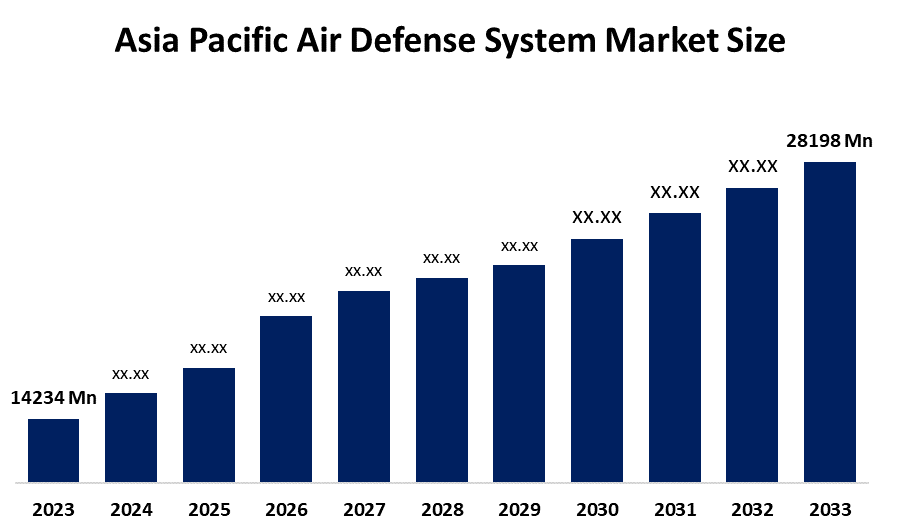
- The Asia Pacific Air Defense System Market Size Was Estimated at USD 14234 Million in 2024
- The Market Size is Expected to Grow at a CAGR of Around 6.41% from 2025 to 2035
- The Asia Pacific Air Defense System Market Size is Expected to Reach USD 28198 Million by 2035
Get more details on this report -
According to a research report published by Spherical Insights & Consulting, the Asia Pacific Air Defense System Market size is anticipated to reach USD 28198 Million by 2035, growing at a CAGR of 6.41% from 2025 to 2035. The market is driven by scalating regional security tensions and significant increases in defense budgets for military modernization. The increasing complexity of aerial threats, such as the proliferation of unmanned aerial vehicles (UAVs) and the development of hypersonic missiles, also necessitates advanced defense capabilities.
Market Overview
The Asia-Pacific air defense systems market comprises the design, production and sale of technologies (radar, missile, command center, C-UAS) to detect, track and intercept aerial threats (drones, aircraft, missiles) due to rising geopolitical tensions, military modernization and increasing defense spending in countries such as China, India and Japan, with a focus on AI integration and indigenous development for enhanced regional security. The Asia-Pacific air defense systems market offers huge opportunities due to regional geopolitical tensions, military modernization (especially in India, China, Japan, South Korea) and rise in drone threats, creating demand for advanced solutions such as AI-integrated command and control, hypersonic missile defense and anti-drone technology, with weapon systems and C&C segments leading growth, and India showing the highest CAGR.
Government initiatives are a primary driver of the Asia-Pacific air defense system market, characterized by increased defense budgets, policies promoting indigenous manufacturing and technology transfer, and strategic international collaborations.
Report Coverage
This research report categorizes the market for the Asia Pacific air defense system market based on various segments and regions, and forecasts revenue growth and analyses trends in each submarket. The report analyses the key growth drivers, opportunities, and challenges influencing the Asia Pacific air defense system market. Recent market developments and competitive strategies, such as expansion, product launch, development, partnership, merger, and acquisition have been included to draw the competitive landscape in the market. The report strategically identifies and profiles the key market players and analyses their core competencies in each sub-segment of the Asia Pacific air defense system market.
Asia Pacific Air Defense System Market Report Coverage
| Report Coverage | Details |
|---|---|
| Base Year: | 2024 |
| Market Size in 2024: | USD 14234 Million |
| Forecast Period: | 2025-2035 |
| Forecast Period CAGR 2025-2035 : | CAGR of 6.41% |
| 2035 Value Projection: | USD 28198 Million |
| Historical Data for: | 2020-2023 |
| No. of Pages: | 179 |
| Tables, Charts & Figures: | 90 |
| Segments covered: | By Component,By Type |
| Companies covered:: | RTX Corporation,Lockheed Martin,Northrop Grumman,MBDA,Hanwha Systems (South Korea),Mitsubishi Heavy Industries (Japan),IAI (Israel),Bharat Electronics Limited (India),LIG Nex1 (South Korea) And Others Players |
| Pitfalls & Challenges: | COVID-19 Empact, Challenge, Future, Growth, & Analysis |
Get more details on this report -
Driving Factors
The Asia-Pacific air defense system market is driven by escalating geopolitical tensions, significant military modernization efforts, and the need to counter advanced threats like hypersonics and drones, prompting increased defense spending, particularly in China, India, and Japan, alongside a push for indigenous technology development and integration of AI for enhanced detection and interception.
Restraining Factors
The primary restraining factors for the Asia Pacific air defense system market include high costs, complex regulatory frameworks, challenges with technology integration and supply chains, and vulnerability to certain advanced threats.
Market Segmentation
The Asia Pacific air defense system market share is categorised into component, type, platform and range.
- The weapon system segment accounted for the largest revenue market share in 2024 and is expected to grow at a significant CAGR during the forecast period.
The Asia Pacific air defense system market is segmented by component into weapon system, fire control system, command and control system and others. Among these, the weapon system segment accounted for the largest revenue market share in 2024 and is expected to grow at a significant CAGR during the forecast period. The growth of the segment is driven by missiles and anti-aircraft guns, which are among the advanced weapon systems that are essential not only for airspace protection but also for the safeguarding of critical infrastructures. Air defense systems still consider weapon systems the most significant category because they are at the heart of both offensive and defensive capabilities, thereby making sure that the system is effective against aerial and missile attacks.
- The missile defense system segment dominated the market in 2024 and is projected to grow at a substantial CAGR during the forecast period.
Based on type, the Asia Pacific air defense system market is segmented into missile defense system, anti-aircraft system, counter unmanned aerial systems, and counter rocket, artillery and mortar systems. Among these, the missile defense system segment dominated the market in 2024 and is projected to grow at a substantial CAGR during the forecast period. The segmental growth is driven by the systems are indispensable for capturing and deactivating fast missiles aimed at important installations. The growing focus on counteracting missile risks, especially from unfriendly nations and terrorist groups, places missile defense systems at the top of the list in the Asia Pacific air defense system market.
- The land segment accounted for the largest revenue market share in 2024 and is expected to grow at a significant CAGR during the forecast period.
The Asia Pacific air defense system market is segmented by platform into land, naval, and airborne. Among these, the land segment accounted for the largest revenue market share in 2024 and is expected to grow at a significant CAGR during the forecast period. The growth of the segment is driven by This is mainly because of their extensive application in the protection of territory borders, important infrastructures and military areas. The air defense systems that are land-based grant the flexibility, mobility and scalability that are essential for large-area aerial threats such as missiles and drones to be defended with different kinds of support.
- The long-range segment dominated the market in 2024 and is projected to grow at a substantial CAGR during the forecast period.
Based on range, the Asia Pacific air defense system market is segmented into long range, medium range, short range. Among these, the long-range segment dominated the market in 2024 and is projected to grow at a substantial CAGR during the forecast period. The segmental growth is driven by systems that are essential for protecting large areas or key sites against different types of aerial attacks. As the emphasis on safeguarding borders and important installations rises, the deployment of LRAD has become a necessity for ensuring total airspace security in Asia Pacific.
Competitive Analysis:
The report offers the appropriate analysis of the key organizations/companies involved within the Asia Pacific air defense system market, along with a comparative evaluation primarily based on their product offering, business overviews, geographic presence, enterprise strategies, segment market share, and SWOT analysis. The report also provides an elaborate analysis focusing on the current news and developments of the companies, which includes product development, innovations, joint ventures, partnerships, mergers & acquisitions, strategic alliances, and others. This allows for the evaluation of the overall competition within the market.
List of Key Companies
- RTX Corporation
- Lockheed Martin
- Northrop Grumman
- MBDA
- Hanwha Systems (South Korea)
- Mitsubishi Heavy Industries (Japan)
- IAI (Israel)
- Bharat Electronics Limited (India)
- LIG Nex1 (South Korea)
- Others
Key Target Audience
- Market Players
- Investors
- End-users
- Government Authorities
- Consulting and Research Firm
- Venture capitalists
- Value-Added Resellers (VARs)
Market Segment
This study forecasts revenue at the Asia Pacific, regional, and country levels from 2020 to 2035. Spherical Insights has segmented the Asia Pacific air defense system market based on the below-mentioned segments:
Asia Pacific Air Defense System Market, By Component
- Weapon System
- Fire Control System
- Command and Control System
- Others
Asia Pacific Air Defense System Market, By Type
- Missile Defense System
- Anti-Aircraft System
- Counter Unmanned Aerial Systems
- Counter Rocket
- Artillery and Mortar Systems
Asia Pacific Air Defense System Market, By Platform
- Land
- Naval
- Airborne
Asia Pacific Air Defense System Market, By Range
- Long Range
- Medium Range
- Short Range
Frequently Asked Questions (FAQ)
-
Q: What is the Asia Pacific air defense system market size?A: Asia Pacific air defense system market size is expected to grow from USD 14234 million in 2024 to USD 28198 million by 2035, growing at a CAGR of 6.41% during the forecast period 2025-2035
-
Q: What is air defense system, and its primary use?A: Air defense systems consist of radar-controlled interceptors, command and control systems, and counter aerial threat devices, which are built to sense, trace, and eliminate air dangers such as piloted military planes, automated drones, and cruise missiles. Consequently, the escalating danger of UAVs (unmanned aerial vehicles) is anticipated to result in increased counter-UAV technologies being incorporated into air defense systems.
-
Q: What factors restrain the Asia Pacific air defense system market?A: The primary restraining factors for the Asia Pacific air defense system market include high costs, complex regulatory frameworks, challenges with technology integration and supply chains, and vulnerability to certain advanced threats.
-
Q: How is the market segmented by component?A: The market is segmented into weapon system, fire control system, command and control system and others
Need help to buy this report?