Microbiology Culture Market Summary
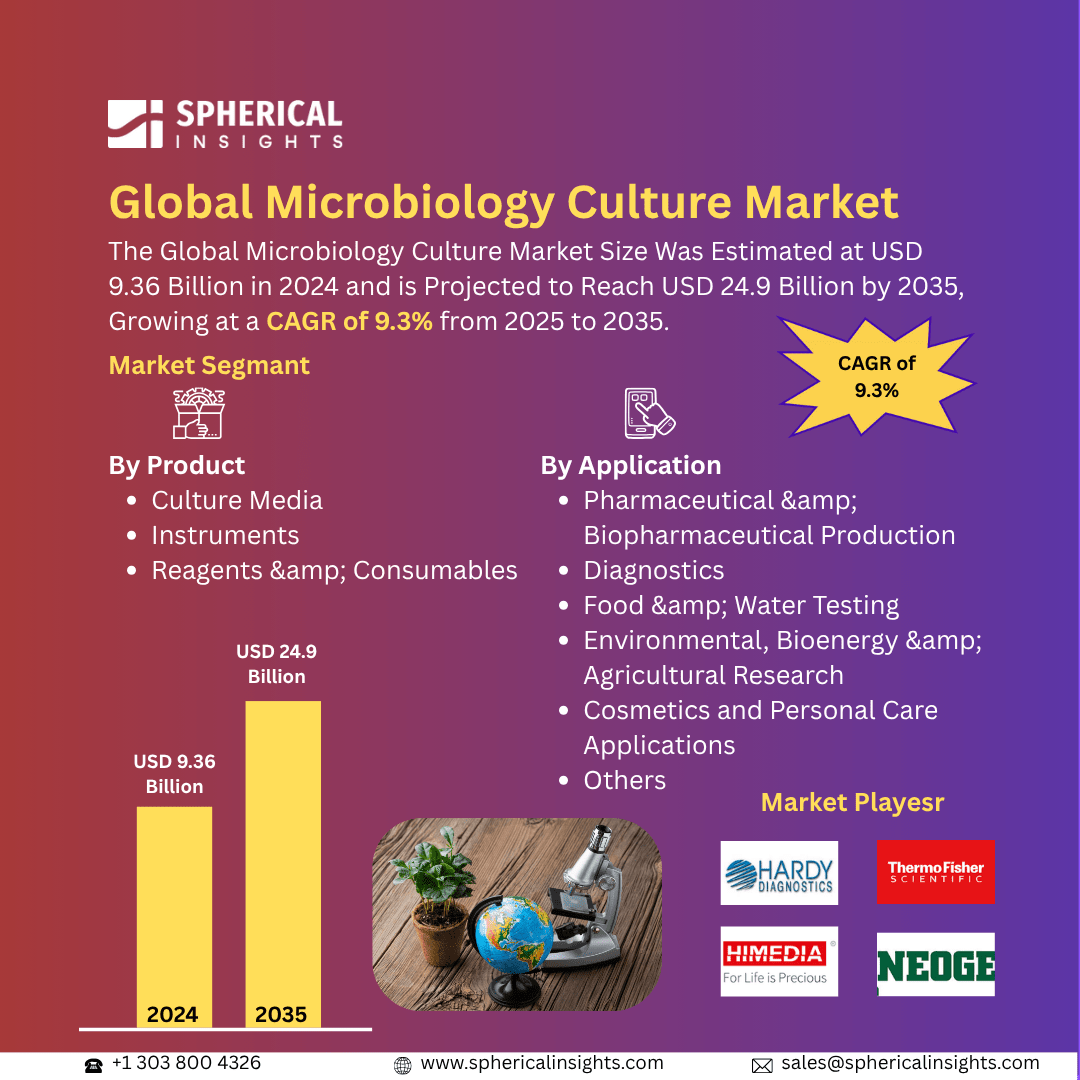
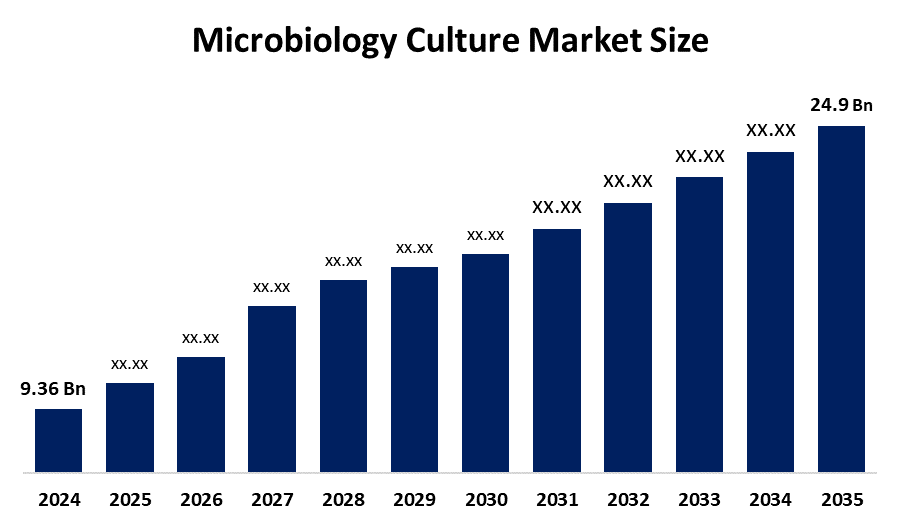
The Global Microbiology Culture Market Size Was Estimated at USD 9.36 Billion in 2024 and is Projected to Reach USD 24.9 Billion by 2035, Growing at a CAGR of 9.3% from 2025 to 2035. The market for microbiology culture is expanding as a result of an increase in the prevalence of infectious diseases, a rise in the need for drug development and diagnostics, improvements in laboratory automation, a growth in pharmaceutical research, and a global focus on environmental testing, food safety, and clinical microbiology applications.
Key Regional and Segment-Wise Insights
- In 2024, the North America microbiology culture market held the largest revenue share of 37.52% and dominated the global market.
- In 2024, the culture media segment held the highest revenue share of 52.61% and dominated the global market by product.
- With the biggest revenue share of 35.72% in 2024, the pharmaceutical and biopharmaceutical production segment led the worldwide microbiology culture market by application.
Global Market Forecast and Revenue Outlook
- 2024 Market Size: USD 9.36 Billion
- 2035 Projected Market Size: USD 24.9 Billion
- CAGR (2025-2035): 9.3%
- North America: Largest market in 2024
- Asia Pacific: Fastest growing market
The market for microbiology cultures operates as the industry which produces and uses microbial cultures to detect microorganisms in food and pharmaceutical products, as well as for therapeutic and environmental applications. These cultures, which contain strains of bacteria, fungi, and viruses, are crucial for quality control, diagnostics, and research. The market development depends on three main elements, which include rising infectious diseases, the requirement for fast, accurate testing, and growing pharmaceutical and biotechnology research activities. The international market expansion occurs because industrial microbiology applications, environmental monitoring, and food safety testing needs continue to rise. People increasingly focus on public health and hygiene. The field of microbiology culture applications continues to improve its reliability and efficiency through automated high-throughput laboratory technology advancements.
Technological progress has completely transformed the market operations for microbiological cultures. The development of automated culture systems, complex media formulations, and fast microbial identification systems leads to improved diagnostic speed, precision and consistency in results. The combination of digital platforms with AI data analysis enables better workflow efficiency and predictive data understanding. The market growth stems from government initiatives that support laboratory development, public health infrastructure, infectious disease control, biotechnology, and microbial science research funding. New microbiology culture solutions reach worldwide market acceptance through research institutions that work in partnership with pharmaceutical companies and diagnostic laboratories.
Product Insights
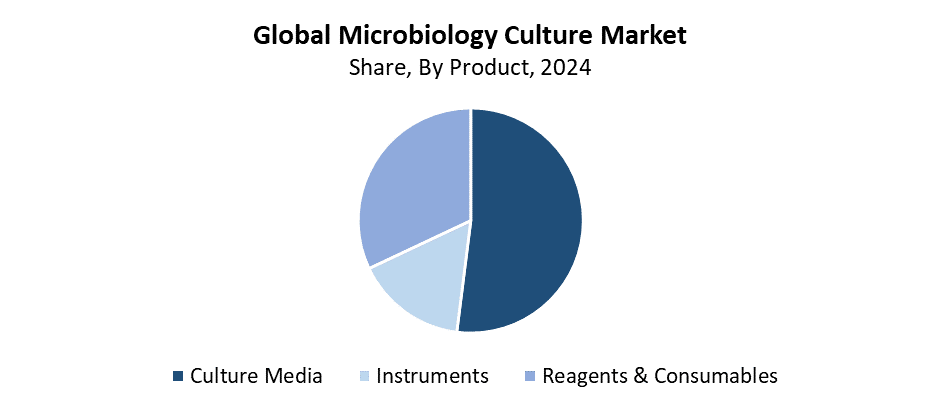
The culture media segment leads the microbiological culture market with the largest revenue share of 52.61% in 2024. Culture media serve as essential tools for clinical diagnostics, pharmaceutical research, food safety testing, and environmental monitoring because they supply essential nutrients for microorganism growth and maintenance. The market segment leads because infectious diseases spread more frequently, while industrial microbiology and drug discovery activities expand, and quick microbial identification becomes essential. Specialised media formulations, including enriched, differential, and selective media, have become better through advancements which enhance microbial isolation and identification methods. Culture medium stands as the leading product category within the global microbiological culture industry. Automated high-throughput laboratory systems continue to gain popularity.
The microbiology culture market's reagents and consumables segment is expected to grow at a significant rate throughout the forecast period. The clinical and pharmaceutical, and food and environmental applications need stains and indicators, pipettes, and lab disposables as essential reagents and consumables for microbial analysis, identification and experimentation. The segment experiences growth because diagnostic testing requires fast and precise results, and biotechnology and pharmaceutical research continue to expand, and automated laboratory workflows become more common. The use of microbiological consumables and reagents is also increasing as a result of increased awareness of hygiene and quality control requirements in the food, industrial, and healthcare sectors. The worldwide market has gained extra speed because of continuous improvements in reagent formulas.
Application Insights
The pharmaceutical and biopharmaceutical production segment led the microbiology culture market with the largest revenue share of 35.72% in 2024. Microbiology cultures maintain their leading position because they serve as essential tools for drug discovery and quality control, vaccine production, and biologic and therapeutic protein manufacturing. The market receives support from three main factors, which include increasing requirements for new medications and growing financial support for biotechnology research. More stringent contamination and microbial safety regulations. The pharmaceutical and biopharmaceutical industry operations become more efficient through automated culture system advancements and fast microbial detection methods, and specialised medium development. The market segment shows growing interest in microbiology culture solutions because healthcare innovation receives worldwide attention, and pharmaceutical manufacturing facilities increase their production capacity.
The microbiology culture markets diagnostics segment is expected to grow at a significant rate during the forecast period. The rising numbers of infectious diseases, along with the need for rapid, precise diagnostic methods, and public awareness about health, are driving this growth. Microbiology cultures serve as essential diagnostic tools for detecting bacterial, viral, and fungal diseases, which enable doctors to deliver immediate targeted treatment. The integration of automated culture systems with quick microbiological identification methods and digital platforms produces better diagnostic outcomes through more precise results and faster operational processes. The diagnostics industry continues to grow rapidly because of increasing laboratory funding and expanding healthcare facilities, and worldwide market expansion for new diagnostic solutions.
Regional Insights
The North American microbiology culture market led the global market with the largest revenue share of 37.52% in 2024. The region maintains its leadership position because of its advanced pharmaceutical and biotechnology research facilities and strong healthcare systems, and widespread automated laboratory technology usage. The market experiences growth because infectious diseases become more common and people require fast and accurate diagnostic tools. North America leads the market because of its main market players and continuous product development, and strong regulatory systems that protect safety and quality standards for clinical and pharmaceutical, and food testing applications. The implementation and expansion of microbiology culture solutions in the area receives support from government programs that back public health initiatives and research funding, and laboratory equipment upgrades.
Europe Microbiology Culture Market Trends
The European microbiology culture market generates a significant revenue share because the technology has become widely used in clinical diagnostics and pharmaceutical, biopharmaceutical manufacturing, and food safety testing operations. Germany, France, and the United Kingdom lead the growth because they maintain advanced healthcare systems and invest heavily in biotechnology research and follow strict regulations for microbial safety and quality control. The area receives continuous technological progress through automated culture systems, fast microbial detection methods, and specialised media formulations. These improve both diagnostic precision and operational speed. The European market maintains its global leadership position through government programs that support public health, infectious disease prevention, and laboratory upgrades, and through rising public knowledge about hygiene and quality standards.
Asia Pacific Microbiology Culture Market Trends
The Asia Pacific microbiology culture market is expected to grow at the fastest CAGR during the forecast period because of rapid industrial growth and healthcare facility expansion, and increasing pharmaceutical and biotech research funding in China, India, Japan, and South Korea. The market requires further development because it faces rising infectious diseases and expanding diagnostic needs, environmental monitoring and food safety needs. The development of automated culture systems, quick microbial identification technologies, and specialised media formulations has led to improved laboratory performance and enhanced reliability and effectiveness. The Asia Pacific region experiences faster adoption of microbiology culture solutions because governments in the area promote public health initiatives, laboratory modernisation, and biotechnology development. The activities receive support from people who now understand the importance of cleanliness and quality control standards.
Key Microbiology Culture Market Companies:
The following are the leading companies in the microbiology culture market. These companies collectively hold the largest market share and dictate industry trends.
- Thermo Fisher Scientific Inc.
- Hardy Diagnostics
- Neogen Corporation
- HiMedia Laboratories
- Merck KGaA
- BD
- bioMérieux SA
- Bio-Rad Laboratories, Inc.
- Amerigo Scientific.
- Others
Recent Developments
- In July 2025, Thermo Fisher Scientific expanded its life sciences portfolio by acquiring Solventum's purification and filtration company and introducing the TruNarc Delta and Tau Handheld Narcotics Analysers in the U.S. and international markets, which improved quick substance detection.
- In August 2024, by introducing its QuickStart Media platform in the United States, Nucleus Biologics sped up the development and optimisation of therapies by providing high-performance, customisable cell culture media for T cells, HEK cells, MSCs, and NK cells.
Market Segment
This study forecasts revenue at global, regional, and country levels from 2020 to 2035. Decision Advisors has segmented the microbiology culture market based on the below-mentioned segments:
Global Microbiology Culture Market, By Product
- Culture Media
- Instruments
- Reagents & Consumables
Global Microbiology Culture Market, By Application
- Pharmaceutical & Biopharmaceutical Production
- Diagnostics
- Food & Water Testing
- Environmental, Bioenergy & Agricultural Research
- Cosmetics and Personal Care Applications
- Others
Global Microbiology Culture Market, By Regional Analysis
- North America
- Europe
- Germany
- UK
- France
- Italy
- Spain
- Russia
- Rest of Europe
- Asia Pacific
- China
- Japan
- India
- South Korea
- Australia
- Rest of Asia Pacific
- South America
- Brazil
- Argentina
- Rest of South America
- Middle East & Africa
- UAE
- Saudi Arabia
- Qatar
- South Africa
- Rest of the Middle East & Africa