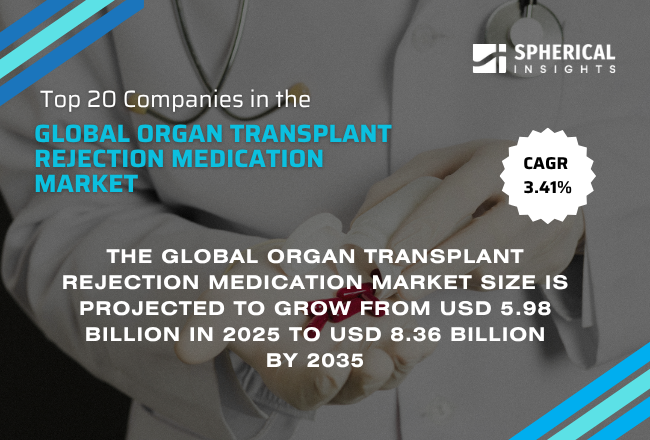
Top 20 Companies in Global Organ Transplant Rejection Medication Market (2026–2035): Expert View by Spherical Insights
RELEASE DATE: Apr 2026 Author: Spherical InsightsRequest Free Sample Speak to Analyst
Introduction
The global organ transplant rejection medication market refers to drugs used to prevent and manage immune system rejection of transplanted organs such as kidney, liver, heart, and lungs. The medications which mainly contain immunosuppressants help to control immune responses which results in better patient outcomes and higher graft survival rates. The market expansion results from four factors which include increasing organ failure rates, rising transplant procedure numbers, advancements in immunosuppressive treatments, and better healthcare system development. The development of targeted therapies which produce fewer side effects together with personalized medicine solutions and the emerging markets which are expanding their transplant access capabilities create business opportunities. The drug industry is making progress towards safer and more efficient drugs because of the increased research and clinical trials which are currently taking place. The market experiences growth through government initiatives which include organ donation awareness programs and funding for transplant research and supportive reimbursement policies that increase transplant rates and provide critical medications to patients worldwide.
In January 2026, Veloxis Pharmaceuticals received orphan drug designation from the U.S. Food and Drug Administration for pegrizeprument, a novel therapy for liver transplant rejection.
Navigate Future Markets with Confidence: Insights from Spherical Insights LLP
The insights presented in this blog are derived from comprehensive market research conducted by Spherical Insights LLP, a trusted advisory partner to leading global enterprises. Backed by in-depth data analysis, expert forecasting, and industry-specific intelligence, our reports empower decision-makers to identify strategic growth opportunities in fast-evolving sectors. Clients seeking detailed market segmentation, competitive landscapes, regional outlooks, and future investment trends will find immense value in the full report. By leveraging our research, businesses can make informed decisions, gain a competitive edge, and stay ahead in the transition toward sustainable and profitable solutions.
Unlock exclusive market insights—Download the Brochure now and dive deeper into the future of the Organ Transplant Rejection Medication Market.
Market Segmentation
Global Organ Transplant Rejection Medication Market Size, Share, By Drug Class (Calcineurin Inhibitors, Antibodies, Antiproliferative Agents, mTOR Inhibitor and Steroids), By Transplant Type (Kidney, Liver, Heart, Lung, Pancreas and Others), By Distribution Channel ( Hospital Pharmacies, Retail Pharmacies and Online Pharmacies), and By Region (North America, Europe, Asia-Pacific, Latin America, Middle East, and Africa), Analysis and Forecast 2026 – 2035.
Organ Transplant Rejection Medication Market Size & Statistics
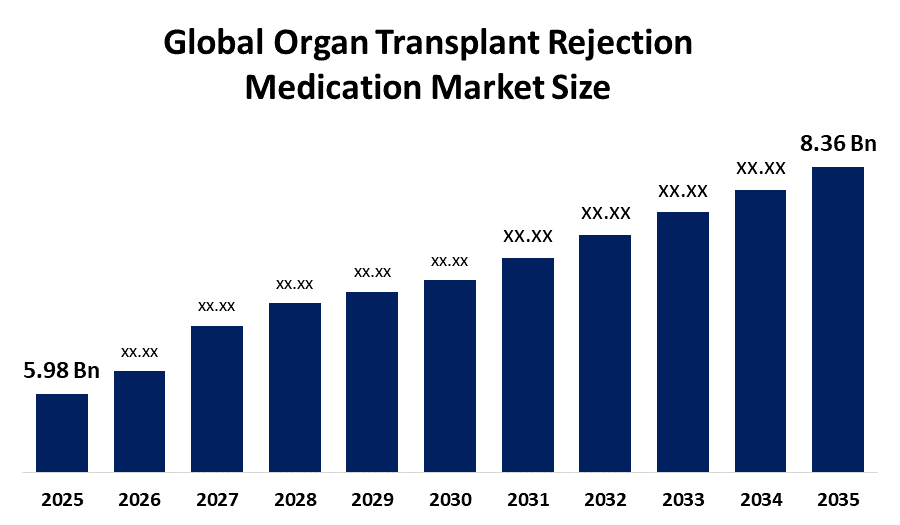
- The Market Size for Organ Transplant Rejection Medication Was Estimated to be worth USD 5.98 Billion in 2025.
- The Market is Going to Expand at a CAGR of 3.41% between 2026 and 2035.
- The Global Organ Transplant Rejection Medication Market Size is anticipated to reach USD 8.36 Billion by 2035.
- North America is expected to generate the highest demand during the forecast period in the Organ Transplant Rejection Medication Market
- Asia Pacific is expected to grow the fastest during the forecast period in the Organ Transplant Rejection Medication Market.
Regional growth and demand
Asia Pacific is expected to grow the fastest during the forecast period in the organ transplant rejection medication market. Rapid growth is driven by increasing prevalence of organ failure, improving healthcare infrastructure, and rising awareness about organ transplantation. Countries such as China, India, and Japan are key contributors due to expanding transplant programs and growing access to advanced treatments. Government initiatives promoting organ donation and increasing healthcare expenditure are further accelerating market growth across the region.
North America is expected to generate the highest demand during the forecast period in the organ transplant rejection medication market. The region’s dominance is driven by advanced healthcare infrastructure, high number of transplant procedures, and strong presence of key pharmaceutical companies. Countries such as the United States and Canada lead due to favorable reimbursement policies, increasing adoption of advanced immunosuppressive therapies, and significant investments in research and development. Additionally, rising organ donation rates and well-established transplant centers further support sustained demand for rejection medications in the region.
Ready to lead the Organ Transplant Rejection Medication Market ?
Discover the regional trends and growth factors shaping the industry. We’re here to assist with expert, personalized data.
Call +1 303 800 4326 or Send us a message for a personalized consultation.
Top 10 Trends in the Organ Transplant Rejection Medication Market
- Personalized Immunosuppressive Therapies
- Biologics & Antibody-Based Treatments
- Next-Generation Immunosuppressants
- Increasing Transplant Procedures
- Reduced Drug Toxicity Focus
- Precision Medicine Adoption
- Biosimilars Growth
- Transplant Immunology Advancements
- Pharmacogenomics Integration
- Emerging Markets Expansion
- Personalized Immunosuppressive Therapies
Personalized immunosuppressive therapies focus on creating individualized treatment plans which use the genetic profile, immune response, and transplant type of each patient. This method achieves better drug results through enhanced drug performance while decreasing negative reactions and the chance of rejection. The development of pharmacogenomics together with biomarker testing enables doctors to determine the most effective drug dosages and treatment combinations that lead to improved patient results. Personalized therapy helps maintain long-term graft success while it decreases medical issues that result from administering either excessive or insufficient immunosuppressive treatment. The trend of precision medicine gains momentum as healthcare professionals start to implement personalized treatment strategies which improve patient results and drive advancements in organ transplant rejection treatment.
- Biologics & Antibody-Based Treatments
Biologics and antibody-based therapies have become essential treatments for organ transplant rejection because they provide precise immune system control. Monoclonal antibodies and other therapies block specific immune pathways which cause rejection, thereby providing better treatment results than standard medications. Biologics have become essential to contemporary transplant medicine because they fulfill the increasing need for safer and more effective treatments while they drive both industry growth and technological advancements.
- Next-Generation Immunosuppressants
Next-generation immunosuppressants are being developed to improve efficacy and safety compared to traditional drugs. These advanced medications aim to provide better immune control with fewer side effects, such as infections and organ toxicity. Innovations include drugs with improved selectivity and longer duration of action, reducing the need for frequent dosing. Researchers are also focusing on minimizing drug interactions and enhancing patient adherence. As transplant procedures increase globally, the demand for more efficient and safer immunosuppressive therapies is rising, making next-generation drugs a crucial trend shaping the future of the organ transplant rejection medication market.
- Increasing Transplant Procedures
The growing number of organ transplant procedures worldwide is a major factor driving the demand for rejection medications. Rising cases of chronic diseases such as kidney failure, liver disease, and heart conditions have increased the need for organ transplants. Improved surgical techniques, better donor availability, and increased awareness about organ donation are contributing to higher transplant rates. Each transplant requires long-term immunosuppressive therapy to prevent rejection, directly boosting market demand. As healthcare systems expand and access to transplant services improves, the number of procedures is expected to rise further, supporting sustained market growth.
- Reduced Drug Toxicity Focus
The primary objective of developing organ transplant rejection medications centers on decreasing drug toxicity. The use of traditional immunosuppressive drugs results in serious side effects which include infections and kidney damage and metabolic disorders. Pharmaceutical companies are currently developing safer drug alternatives which produce fewer side effects while preserving their therapeutic effects. The research team employs three methods to decrease toxicity which include targeted drug delivery and lower dosing regimens and combination therapies. This trend helps patients achieve better quality of life while they continue to follow their treatment plans. The demand for medications with low toxicity will increase as safety becomes a primary focus in transplant care.
Empower your strategic planning:
Stay informed with the latest industry insights and market trends to identify new opportunities and drive growth in the organ transplant rejection medication market. To explore more in-depth trends, insights, and forecasts, please refer to our detailed report.
Unlock exclusive market insights—Download the Brochure now and dive deeper into the future of the Organ Transplant Rejection Medication Market.
Top 20 Companies Leading the Organ Transplant Rejection Medication Market
- Astellas Pharma Inc.
- Novartis AG
- F. Hoffmann-La Roche Ltd
- Sanofi S.A.
- Bristol-Myers Squibb Company
- GlaxoSmithKline plc
- Pfizer Inc.
- AbbVie Inc.
- Viatris Inc.
- Veloxis Pharmaceuticals
- Dr. Reddy’s Laboratories
- Zydus Lifesciences
- Sun Pharmaceutical Industries Ltd.
- Teva Pharmaceutical Industries Ltd.
- Takeda Pharmaceutical Company Limited
- Biocon Limited
- Accord Healthcare Ltd.
- Intas Pharmaceuticals Ltd.
- Lupin Limited
- Cipla Limited
- Astellas Pharma Inc.
Headquarters: Tokyo, Japan
Astellas Pharma Inc. is a leading global pharmaceutical company with a strong presence in transplant medicine and immunosuppressive therapies. The company is well known for its flagship drug tacrolimus, widely used to prevent organ rejection in kidney, liver, and heart transplant patients. Astellas focuses on innovation in immunology and precision medicine to improve long-term transplant outcomes. Its robust research and development pipeline aims to develop safer and more effective therapies with reduced side effects. With a global footprint and strategic collaborations, Astellas continues to play a critical role in advancing organ transplant rejection treatments.
- Novartis AG
Headquarters: Basel, Switzerland
Novartis AG is a global healthcare company specializing in innovative medicines, including therapies for transplant rejection. The company has a strong portfolio of immunosuppressive drugs and continues to invest in advanced biologics and targeted therapies. Novartis focuses on improving patient outcomes through precision medicine and cutting-edge research. Its commitment to innovation is supported by extensive clinical trials and global collaborations. The company also emphasizes accessibility and affordability of medicines across different regions. With a strong presence in both developed and emerging markets, Novartis remains a key contributor to the growth of the organ transplant rejection medication market.
- F. Hoffmann-La Roche Ltd
Headquarters: Basel, Switzerland
F. Hoffmann-La Roche Ltd operates worldwide as a top company, providing pharmaceutical and diagnostic products while specializing in immunology and biotechnology. The company develops biologic therapies together with diagnostic tools that support medical professionals working in transplant medicine. Roche provides healthcare solutions through its precision medicine approach, which combines cutting-edge diagnostic methods and specific treatment options to enhance patient care. The research studies immune system regulation methods, which help to develop techniques for organ rejection management. Through its ongoing innovation efforts together with its strategic partnerships and biotechnology investments, Roche expands its presence in transplant therapeutics while developing safer treatment methods.
- Sanofi S.A.
Headquarters: Paris, France
Sanofi S.A. operates worldwide as a pharmaceutical company that develops new medical treatments for various diseases, including immunological disorders and organ transplantation. The company develops biologic and antibody treatments which will help reduce the risk of organ rejection among patients. Sanofi allocates large funding amounts to research and development activities for building medicines that achieve better safety and result in more effective outcomes. The company uses research partnerships with academic institutions and biotechnology companies to enhance its capacity for developing new ideas. Sanofi maintains a strong international business network while developing solutions that prioritize patient needs, which enables the company to advance transplant rejection treatment methods and drive market expansion.
- Bristol-Myers Squibb Company
Headquarters: New York, United States
Bristol-Myers Squibb Company is a leading biopharmaceutical company known for its expertise in immunology and innovative therapies. The company has a strong research focus on immune system modulation, which is essential in preventing organ transplant rejection. It develops advanced biologics and targeted treatments aimed at improving patient outcomes and reducing complications. Bristol-Myers Squibb invests significantly in clinical research and collaborations to expand its therapeutic portfolio. Its commitment to innovation and precision medicine supports the development of next-generation therapies, making it an important player in the organ transplant rejection medication market.
Are you ready to discover more about the organ transplant rejection medication market?
The report provides an in-depth analysis of the leading companies operating in the global organ transplant rejection medication market. It includes a comparative assessment based on their product portfolios, business overviews, geographical footprint, strategic initiatives, market segment share, and SWOT analysis. Each company is profiled using a standardized format that includes:
Unlock exclusive market insights—Download the Brochure now and dive deeper into the future of the Organ Transplant Rejection Medication Market.
Company Profiles
- Astellas Pharma Inc.
- Business Overview
- Company Snapshot
- Products Overview
- Company Market Share Analysis
- Company Coverage Portfolio
- Financial Analysis
- Recent Developments
- Merger and Acquisitions
- SWOT Analysis
- Novartis AG
- F. Hoffmann-La Roche Ltd
- Sanofi S.A.
- Bristol-Myers Squibb Company
- GlaxoSmithKline plc
- Pfizer Inc.
- AbbVie Inc.
- Viatris Inc
- Others.
Conclusion
The global market for organ transplant rejection medication shows consistent growth because of two factors which are increasing organ transplant operations and rising organ failure rates and because of advancements in immunosuppressive treatment methods. The use of personalized and targeted treatments which include biologics and antibody-based therapies and next-generation immunosuppressants has become more common because these treatments help patients achieve better results while experiencing fewer side effects. Research funding and government programs which support organ donation and the positive reimbursement systems found in developed countries have created additional growth opportunities for the market. North America leads in market demand because of its advanced healthcare infrastructure while Asia Pacific shows the fastest growth rate because of its expanding transplant programs and better treatment accessibility. The market will continue to grow worldwide because of ongoing innovations and regulatory backing and the rising demand for transplant procedures.
Our Report
North America Antifungal Drugs Market Size Report 2035
North America Nuclear Medicine Market Size Report 2035
North America Antiepileptic Drugs Market Size Report 2035
Russia Vodka Market Size Report 2035
Australia Farm Tire Market Size Report 2035
About the Spherical Insights & Consulting
Spherical Insights & Consulting is a market research and consulting firm which provides actionable market research study, quantitative forecasting and trends analysis provides forward-looking insight especially designed for decision makers and aids ROI. Which is catering to different industry such as financial sectors, industrial sectors, government organizations, universities, non-profits and corporations. The company's mission is to work with businesses to achieve business objectives and maintain strategic improvements.
CONTACT US:
For More Information on Your Target Market, Please Contact Us Below:
Phone: +1 303 800 4326 (the U.S.)
Phone: +91 90289 24100 (APAC)
Email: inquiry@sphericalinsights.com, sales@sphericalinsights.com
Contact Us: https://www.sphericalinsights.com/contact-us
Need help to buy this report?