Japan Baby Care Products Market Size, Share, By Product Type (Skin Care, Toiletries, Hair Care, Food & Beverages, and Others), By Age Group (0-12 Months, 13-24 Months, and 24-48 Months), By Sales Channel (Supermarkets/Hypermarkets, Specialty Stores, Pharmacies/Drug Stores, Online, and Others), Japan Baby Care Products Market Industry Trend, Forecasts to 2035
Industry: Healthcare
Japan Baby Care Products Market Insights Forecasts to 2035
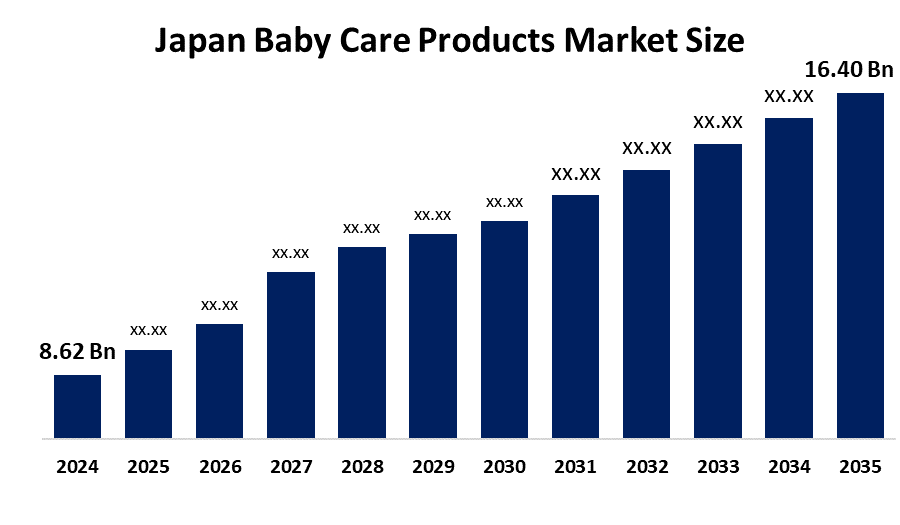
- Japan Baby Care Products Market Size 2024: USD 8.62 billion
- Japan Baby Care Products Market Size 2035: USD 16.40 billion
- Japan Baby Care Products Market CAGR 2024: 6.02%
- Japan Baby Care Products Market Segments, Product, Age Group and Sales Channel.
Get more details on this report -
The Japan baby care products market includes items made for infants such as diapers, wipes, lotions, shampoos, skincare and feeding essentials. It’s shaped by parents’ focus on safety, quality and convenience. Even with fewer births, Japanese families spend more on premium, eco-friendly baby care items sold by both online and traditional retail channels. Furthermore, the Japan baby care products market is growing because parents are spending more per child and choosing high-quality products, including organic, gentle, and hypoallergenic options. Rising disposable income, increasing awareness of infant hygiene and nutrition, and expanding e-commerce access help expand sales. Even with a low birthrate, higher spending per baby drives a steady market value increase.
The Japan government supports family health through initiatives focused on maternal and child nutrition and wellbeing. Programs like nutrition action plans and sustainability policies encourage healthier food systems and care practices. While policies aim to improve child health, broader demographic challenges like low birth rates remain obstacles, encouraging support for families and childcare.
Japan baby care products market trends include strong demand for organic, natural, chemical-free baby care products and sustainable options. Parents increasingly choose plant-based, dermatologist-tested items. E-commerce and omnichannel retailing are shaping how consumers buy products. Busy lifestyles also push multifunctional and premium products that offer convenience and safety, especially in urban areas.
Market Dynamics of the Japan Baby Care Products Market:
The Japan baby care products market is driven by parents spending more per child on safe, high quality items, especially organic and gentle formulas. Rising disposable income and busy lifestyles boost demand for convenience products. Growing health and hygiene awareness pushes purchases of premium, eco-friendly goods. Expansion of e commerce and online shopping also makes products easier to find and buy, increasing overall sales.
he Japan baby care products market faces restraints mainly due to the country’s declining birth rate, which reduces the number of potential consumers. High product prices for premium and organic items can limit demand among price-sensitive families. Strict regulations and quality standards increase production costs. Strong competition among established brands also makes market entry difficult for new companies
.
The opportunities include innovation in organic, sustainable, and multifunctional baby care products that meet health and convenience needs. Brands can expand through digital and e-commerce channels to reach more consumers. With rising interest in premium, safe, and eco-conscious items, companies that offer trusted and differentiated products have strong potential for market growth.
Japan Baby Care Products Market Report Coverage
| Report Coverage | Details |
|---|---|
| Base Year: | 2024 |
| Market Size in 2024: | USD 8.62 Billion |
| Forecast Period: | 2025-2035 |
| Forecast Period CAGR 2025-2035 : | CAGR of 6.02 % |
| 2035 Value Projection: | USD 16.40 Billion |
| Historical Data for: | 2020-2023 |
| No. of Pages: | 210 |
| Tables, Charts & Figures: | 90 |
| Segments covered: | By Product,By Age Group |
| Companies covered:: | Unicharm Corporation,Kao,Pigeon,Procter,Asahi And Others Players |
| Pitfalls & Challenges: | COVID-19 Empact, Challenge, Future, Growth, & Analysis Pitfalls & Challenges |
Get more details on this report -
Market Segmentation
The Japan baby care products market share is classified into products, age groups, and sales channels.
By Product:
The Japan baby care products market is divided by product into skin care, toiletries, hair care, food & beverages, and others. Among these, the skin care segment dominated the share in 2024 and is anticipated to grow at a remarkable CAGR during the forecast period. The skin care segment dominates due to Japan parents prioritising infant skin safety and hygiene. Babies have delicate skin, increasing demand for gentle, hypoallergenic, and chemical-free products. These items are used daily, driving repeat purchases. Strong trust in premium brands and willingness to spend more on quality products further support this segment’s dominance.
By Age Group:
The Japan baby care products market is divided by age group into 0 12 months, 1 24 months, and 24 48 months. Among these, the 0 12 months segment dominated the share in 2024 and is anticipated to grow at a remarkable CAGR during the forecast period. The 0-12 months segment dominates due to newborns need for constant care and frequent product use, including diapers, wipes, lotions, and formula. Parents are especially careful during the first year and prefer premium, safe, and high quality products. Higher spending per baby in this early stage increases overall demand and market share.
By Sales Channel:
The Japan baby care products market is divided by sales channel into supermarkets and hypermarkets, speciality stores, pharmacies drug stores, online, and others. Among these, the supermarkets and hypermarkets segment dominated the share in 2024 and is anticipated to grow at a remarkable CAGR during the forecast period. The supermarkets and hypermarkets dominate because they offer a wide range of baby care products under one roof at competitive prices. Parents prefer these stores for convenience, discounts, and trusted brands. However, online channels are growing quickly due to home delivery, product variety, reviews, and easy price comparison benefits.
Competitive Analysis:
The report offers the appropriate analysis of the key organisations companies involved within the Japan baby care products market, along with a comparative evaluation primarily based on their Product offering, business overviews, geographic presence, enterprise strategies, segment market share, and SWOT analysis. The report also provides an elaborate analysis focusing on the current news and developments of the companies, which includes Product development, innovations, joint ventures, partnerships, mergers & acquisitions, strategic alliances, and others. This allows for the evaluation of the overall competition within the market.
Top Key Companies in Japan Baby Care Products Market:
- Unicharm
- Kao
- Pigeon
- Procter
- Asahi Group
- Morinaga Milk
- Meiji
- Kimberly
- Kenvue
- Other
Key Target Audience
- Market Players
- Investors
- End-users
- Government Authorities
- Consulting and Research Firm
- Venture capitalists
- Value-Added Resellers
Market Segment
This study forecasts revenue at the Japan, regional, and country levels from 2020 to 2035. Spherical Insights has segmented the Japan baby care products market based on the below-mentioned segments:
Japan Baby Care Products Market, By Product.
- Skin Care
- Toiletries
- Hair Care
- Food & Beverages
- Others
Japan Baby Care Products Market, By Age Group
- 0-12 Months
- 13-24 Months
- 24-48 Months
Japan Baby Care Products Market, by Sales Channel.
- Supermarkets/Hypermarkets
- Speciality Stores
- Pharmacies/Drug Stores
- Online
- Others
Need help to buy this report?