Top 25 Companies in Global Wearable Electronics Market: Statistics Report Till 2035
RELEASE DATE: Apr 2026 Author: Spherical InsightsRequest Free Sample Speak to Analyst
Description
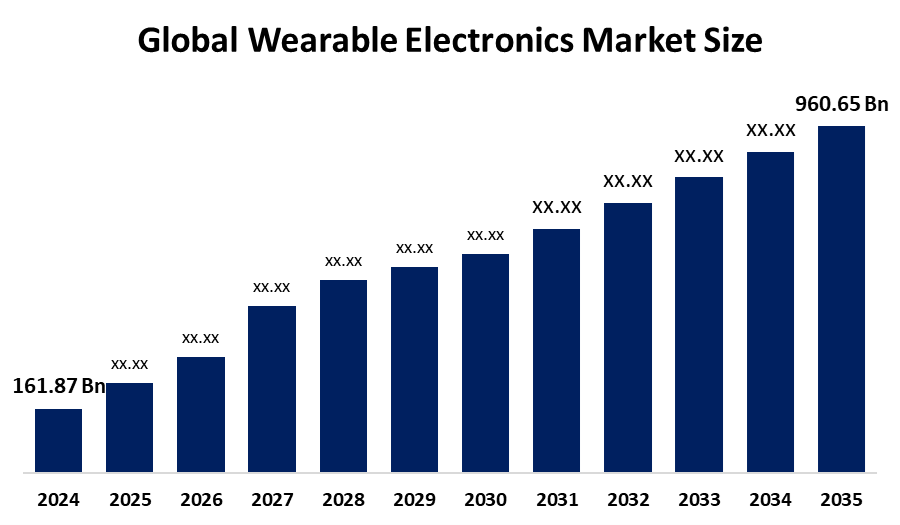
According to a research report published by Spherical Insights & Consulting, the Global Wearable Electronics Market Size is projected to grow from USD 161.87 billion in 2024 to USD 960.65 billion by 2035, at a CAGR of 17.57% during the forecast period 2024–2035. The wearable electronics market is driven by rising health awareness, increasing adoption of fitness tracking devices, advancements in sensor technology, growing integration with smartphones, and expanding applications in healthcare, sports, and lifestyle monitoring.
Introduction
The wearable electronics market refers to electronic devices designed to be worn on the body, such as smartwatches, fitness trackers, smart glasses, and health monitoring devices, integrating sensors and connectivity features. Key raw materials include semiconductors, flexible polymers, advanced textiles, lithium-ion batteries, and microelectronic components. The market is driven by rising health awareness, increasing demand for continuous fitness and medical monitoring, and growing smartphone integration. Applications span healthcare for remote patient monitoring, sports and fitness tracking, consumer electronics, and industrial safety. Governments worldwide are promoting digital health initiatives, wearable adoption in telemedicine, and investments in smart healthcare infrastructure. Recent developments include the launches of AI-enabled wearables and enhanced biometric sensors by leading technology firms. In recent news, companies are investing in next-generation smartwatches with real-time diagnostics and improved battery life. Technological advancements such as flexible electronics, IoT integration, and miniaturized sensors continue to enhance device performance, accuracy, and user comfort.
Navigate Future Markets with Confidence: Insights from Spherical Insights LLP
The insights presented in this blog are derived from comprehensive market research conducted by Spherical Insights LLP, a trusted advisory partner to leading global enterprises. Backed by in-depth data analysis, expert forecasting, and industry-specific intelligence, our reports empower decision-makers to identify strategic growth opportunities in fast-evolving sectors. Clients seeking detailed market segmentation, competitive landscapes, regional outlooks, and future investment trends will find immense value in the full report. By leveraging our research, businesses can make informed decisions, gain a competitive edge, and stay ahead in the transition toward sustainable and profitable solutions.
In March 2026, Ultrahuman launched its Ring Pro smart wearable with advanced sensors, long battery life, and subscription-free health tracking, intensifying competition in the smart ring segment.
In April 2026, Google is developing a new screenless Fitbit wearable integrated with AI-driven health insights, reflecting a shift toward minimalistic and data-focused wearable designs.
Unlock exclusive market insights—Download the Brochure now and dive deeper into the future of the Wearable Electronics Market.
Market Segmentation
Global Wearable Electronics Market Size, Share, and COVID-19 Impact Analysis, By Product Type (Smartwatches, Fitness Trackers, Smart Glasses, Smart Clothing, Wearable Medical Devices), By Component (Sensors, Connectivity ICs, Processors, Memory, Batteries, Displays), By Application (Healthcare, Consumer Electronics, Sports and Fitness, Industrial, Military and Defense), By Distribution Channel (Online Stores, Offline Retail), By End-User (Men, Women, Kids), By Region (North America, Europe, Asia Pacific, Latin America, Middle East and Africa), Analysis and Forecast, 2024–2035.
Wearable Electronics Market Size & Statistics
- The Market Size for Wearable Electronics Was Estimated to be worth USD 161.87 billion in 2024.
- The Market is Going to Expand at a CAGR of 17.57% between 2024 and 2035.
- The Global Wearable Electronics Market Size is anticipated to reach USD 960.65 billion by 2035.
- Europe is expected to grow the fastest during the forecast period in the wearable electronics market.
- Asia Pacific is expected to generate the highest demand during the forecast period in the wearable electronics market.
Regional growth and demand
Europe is expected to grow the fastest during the forecast period in the wearable electronics market. The region is experiencing rapid expansion due to increasing adoption of health monitoring devices, a rising aging population, and strong demand for advanced digital healthcare solutions. Government initiatives promoting wearable technologies in remote patient monitoring and chronic disease management are supporting growth. Additionally, increasing investments in research and development, along with the presence of established consumer electronics brands, are driving innovation and market penetration across countries such as Germany, the UK, and France.
In January 2026, wearable innovations showcased at CES and European tech collaborations highlighted advancements in AI-driven health monitoring devices, including smart diagnostic tools and biometric tracking systems, reflecting a strong regional focus on digital health and preventive care technologies.
Asia Pacific is expected to generate the highest demand during the forecast period in the wearable electronics market. This dominance is driven by a large consumer base, rising disposable incomes, and widespread adoption of affordable smartwatches and fitness trackers. The region benefits from strong manufacturing hubs, particularly in China, Japan, and South Korea, along with increasing smartphone penetration. Furthermore, growing awareness of fitness and preventive healthcare, coupled with continuous product launches and technological advancements, is fueling sustained demand across emerging and developed economies.
In March 2026, Japan-based researchers developed innovative sweat-powered wearable sensors capable of generating electricity from human perspiration, marking a breakthrough toward battery-free wearable devices and sustainable health monitoring solutions across the region.
Ready to lead the Wearable Electronics Market?
Discover the regional trends and growth factors shaping the industry. We’re here to assist with expert, personalized data.
Call +1 303 800 4326 or Send us a message for a personalized consultation.
Unlock exclusive market insights—Download the Brochure now and dive deeper into the future of the Wearable Electronics Market.
Top 10 Trends in the Wearable Electronics Market
• Increasing Demand for Health and Fitness Monitoring Devices
• Integration of AI and Advanced Analytics in Wearables
• Rising Popularity of Smartwatches and Smart Rings
• Growth in Remote Patient Monitoring and Telehealth
• Development of Flexible and Smart Textiles
• Advancements in Battery Life and Energy Efficiency
• Expansion of Wearables in Industrial and Enterprise Applications
• Growing Adoption of IoT-Enabled Connected Devices
• Focus on Data Privacy and Cybersecurity
• Strategic Collaborations and Product Innovations
Top 5 Trends
- Increasing Demand for Health and Fitness Monitoring Devices
Wearable electronics are rapidly gaining popularity due to rising health awareness and the growing need for continuous health monitoring. Devices such as smartwatches and fitness trackers enable users to track heart rate, sleep patterns, calories, and physical activity in real time. Increasing prevalence of lifestyle-related diseases like obesity and diabetes is further driving demand for these devices. Additionally, integration with smartphones and health apps enhances user convenience and data accessibility. The trend toward preventive healthcare and personalized wellness solutions is making wearable devices an essential tool for consumers globally, significantly boosting market growth.
- Integration of AI and Advanced Analytics in Wearables
Artificial intelligence and advanced analytics are transforming wearable electronics by enabling real-time data processing and predictive health insights. AI-powered wearables can detect anomalies such as irregular heart rhythms and provide early warnings, improving healthcare outcomes. These devices also offer personalized recommendations based on user behavior and health data. Cloud connectivity and machine learning algorithms enhance accuracy and functionality, making wearables smarter and more efficient. This trend is expanding the use of wearables beyond fitness into medical diagnostics and remote monitoring, driving innovation and increasing adoption across both consumer and healthcare sectors.
- Rising Popularity of Smartwatches and Smart Rings
Smartwatches and smart rings are becoming increasingly popular due to their compact design, multifunctionality, and improved aesthetics. These devices offer features such as notifications, health monitoring, GPS tracking, and contactless payments. Continuous advancements in battery life, sensors, and user interfaces are enhancing their appeal. Smart rings, in particular, are emerging as a discreet alternative to bulkier devices, attracting new users. Growing consumer preference for stylish, lightweight, and convenient wearable technology is driving strong demand, making these product segments key contributors to the expansion of the wearable electronics market.
- Growth in Remote Patient Monitoring and Telehealth
Wearable electronics are playing a vital role in remote patient monitoring and telehealth by enabling continuous tracking of vital health parameters. These devices allow healthcare providers to monitor patients in real time, reducing hospital visits and improving treatment efficiency. The adoption of telemedicine has accelerated significantly, supported by government initiatives and digital healthcare investments. Wearables help in managing chronic conditions and post-treatment care more effectively. This trend is enhancing healthcare accessibility, especially in remote areas, and is expected to drive substantial growth in the wearable electronics market during the forecast period.
- Development of Flexible and Smart Textiles
Advancements in flexible electronics and smart textiles are revolutionizing the wearable electronics market by enabling devices to be integrated directly into clothing. These smart fabrics can monitor body temperature, movement, and other physiological parameters while providing enhanced comfort and durability. The technology is gaining traction in healthcare, sports, fitness, and military applications. Continuous research in nanotechnology and material science is improving performance and expanding capabilities. As consumers seek more seamless and comfortable wearable solutions, smart textiles are expected to play a significant role in shaping the future of wearable electronics.
Empower your strategic planning:
Stay informed with the latest industry insights and market trends to identify new opportunities and drive growth in the Wearable Electronics market. To explore more in-depth trends, insights, and forecasts, please refer to our detailed report.
Unlock exclusive market insights—Download the Brochure now and dive deeper into the future of the Wearable Electronics Market.
Top 25 Companies Leading the Wearable Electronics Market
- Apple Inc.
- Samsung Electronics Co. Ltd.
- Xiaomi Corporation
- Huawei Technologies Co. Ltd.
- Garmin Ltd.
- Alphabet Inc.
- Sony Group Corporation
- Microsoft Corporation
- Meta Platforms Inc.
- Lenovo Group Ltd.
- LG Electronics
- Fossil Group Inc.
- Zepp Health Corporation
- Withings
- Omron Healthcare Inc.
- Polar Electro Oy
- Coros Wearables Inc.
- Oura Health Ltd.
- WHOOP Inc.
- Vuzix Corporation
- Magic Leap Inc.
- Qualcomm Technologies Inc.
- HTC Corporation
- Snap Inc.
- Imagine Marketing Limited (boAt)
- Apple Inc.
Headquarters: Cupertino, California, USA
Apple Inc. is a leading player in the wearable electronics market, driven by its Apple Watch and AirPods product portfolio. The company offers advanced health monitoring features such as ECG, blood oxygen tracking, and fitness analytics, supported by seamless integration with its iOS ecosystem. Apple focuses on innovation in sensor technology, digital health solutions, and user experience. Its strong brand value, continuous product development, and partnerships with healthcare institutions enable it to maintain a dominant global position in the wearable electronics industry.
- Samsung Electronics Co. Ltd.
Headquarters: Suwon, South Korea
Samsung Electronics Co. Ltd. is a major competitor in the wearable electronics market with its Galaxy Watch and Galaxy Buds lineup. The company integrates advanced biosensors, sleep tracking, and ECG monitoring into its devices. Collaboration with Google for Wear OS enhances its software ecosystem. Samsung leverages its semiconductor and display expertise to drive innovation. Its focus on AI-enabled wearables and expansion into new product categories strengthens its global market presence.
- Xiaomi Corporation
Headquarters: Beijing, China
Xiaomi Corporation is a prominent wearable electronics manufacturer known for its affordable and feature-rich devices such as Mi Bands and smartwatches. The company emphasizes cost efficiency, long battery life, and strong smartphone integration. Xiaomi targets mass-market consumers, particularly in emerging economies. Its high-volume production strategy, continuous product innovation, and expanding ecosystem of connected devices help it capture a significant share of the global wearable electronics market.
- Huawei Technologies Co. Ltd.
Headquarters: Shenzhen, China
Huawei Technologies Co. Ltd. is a key player offering a wide range of wearable devices, including smartwatches and fitness bands. The company integrates advanced health monitoring technologies such as heart rate tracking, SpO2 measurement, and AI-based analytics. Huawei leverages its expertise in telecommunications and IoT to provide seamless connectivity. Strong investments in research and development and expansion of its device ecosystem continue to drive growth in the wearable electronics market.
- Garmin Ltd.
Headquarters: Olathe, Kansas, USA
Garmin Ltd. is a specialized company in the wearable electronics market, focusing on GPS-enabled devices for fitness, outdoor, and professional applications. Its products are known for accuracy, durability, and long battery life. Garmin targets athletes and adventure enthusiasts with advanced performance tracking features. The company emphasizes innovation in navigation, health monitoring, and rugged device design, enabling it to maintain a strong position in premium and niche wearable segments.
Are you ready to discover more about the Wearable Electronics market?
The report provides an in-depth analysis of the leading companies operating in the global Wearable Electronics market. It includes a comparative assessment based on their product portfolios, business overviews, geographical footprint, strategic initiatives, market segment share, and SWOT analysis. Each company is profiled using a standardized format that includes:
Company Profiles
- Apple Inc.
- Business Overview
- Company Snapshot
- Products Overview
- Company Market Share Analysis
- Company Coverage Portfolio
- Financial Analysis
- Recent Developments
- Merger and Acquisitions
- SWOT Analysis
- Samsung Electronics Co. Ltd.
- Xiaomi Corporation
- Huawei Technologies Co. Ltd.
- Garmin Ltd.
- Alphabet Inc.
- Sony Group Corporation
- Microsoft Corporation
- Meta Platforms Inc.
- others.
Conclusion
The wearable electronics market is experiencing rapid growth globally, driven by increasing health awareness, rising demand for fitness and medical monitoring devices, and continuous technological advancements such as AI integration, IoT connectivity, and flexible electronics. Key trends include the popularity of smartwatches and smart rings, expansion in remote patient monitoring, and development of smart textiles. Leading companies like Apple, Samsung, Xiaomi, Huawei, and Garmin are driving innovation through advanced sensors, enhanced battery life, and ecosystem integration. With supportive government initiatives, growing adoption in both consumer and healthcare sectors, and ongoing R&D investments, the market is poised for significant expansion during 2024–2035.
Our Reports:
Japan Anti-Pollution Nasal Spray Market Size, Growth, Forecast to 2035
Japan Food Safety Testing Market Size, Growth, Forecast to 2035
France Commercial Refrigeration Equipment Market Size, Growth, Forecast to 2035
France Next-Generation Cancer Diagnostics Market Size, Forecast to 2035
Unlock exclusive market insights—Download the Brochure now and dive deeper into the future of the Wearable Electronics Market.
About the Spherical Insights & Consulting
Spherical Insights & Consulting is a market research and consulting firm which provides actionable market research study, quantitative forecasting and trends analysis provides forward-looking insight especially designed for decision makers and aids ROI. Which is catering to different industry such as financial sectors, industrial sectors, government organizations, universities, non-profits and corporations. The company's mission is to work with businesses to achieve business objectives and maintain strategic improvements.
CONTACT US:
For More Information on Your Target Market, Please Contact Us Below:
Phone: +1 303 800 4326 (the U.S.)
Phone: +91 90289 24100 (APAC)
Email: inquiry@sphericalinsights.com, sales@sphericalinsights.com
Contact Us: https://www.sphericalinsights.com/contact-us
Need help to buy this report?