Top 10 Companies in Global Anti-VEGF Therapeutics Market: Statistics Report Till 2035
RELEASE DATE: Mar 2026 Author: Spherical InsightsRequest Free Sample Speak to Analyst
Introduction
Anti-VEGF therapeutics are biologic drugs, including monoclonal antibodies, that inhibit vascular endothelial growth factor (VEGF) to prevent abnormal blood vessel formation and leakage. They are primarily used in ophthalmology for retinal diseases and in oncology to restrict tumor angiogenesis. The market is driven by ophthalmology and oncology applications. Key uses include neovascular wet AMD, diabetic retinopathy, and diabetic macular edema due to rising diabetes prevalence; retinal vein occlusion for macular edema management; and oncology, where anti-VEGF drugs inhibit tumor angiogenesis. The U.S. Food and Drug Administration (FDA) has approved Yesafili and Opuviz as the first interchangeable biosimilars to Eylea (aflibercept), expanding the portfolio of anti-VEGF therapeutics for retinal diseases. These interchangeable products inhibit VEGF and are indicated for wet age-related macular degeneration, diabetic macular edema, retinal vein occlusion, and diabetic retinopathy, making them highly relevant to the anti-VEGF market. Innovations and future opportunities include extended-durability agents like Faricimab (Vabysmo), high-dose formulations such as Eylea HD, and sustained-release delivery systems like the Port Delivery System with ranibizumab. In addition, next-generation therapies, gene-based ocular treatments, combination approaches, and expanded clinical indications are enhancing efficacy, reducing injection frequency, and creating significant growth potential in retinal disease management.
Navigate Future Markets with Confidence: Insights from Spherical Insights LLP
The insights presented in this blog are derived from comprehensive market research conducted by Spherical Insights LLP, a trusted advisory partner to leading global enterprises. Backed by in-depth data analysis, expert forecasting, and industry-specific intelligence, our reports empower decision-makers to identify strategic growth opportunities in fast-evolving sectors. Clients seeking detailed market segmentation, competitive landscapes, regional outlooks, and future investment trends will find immense value in the full report. By leveraging our research, businesses can make informed decisions, gain a competitive edge, and stay ahead in the transition toward sustainable and profitable solutions.
Unlock exclusive market insights— Download the Brochure now and dive deeper into the future of the Global Articaine Hydrochloride Market.
Anti-VEGF Therapeutics Market Size & Statistics
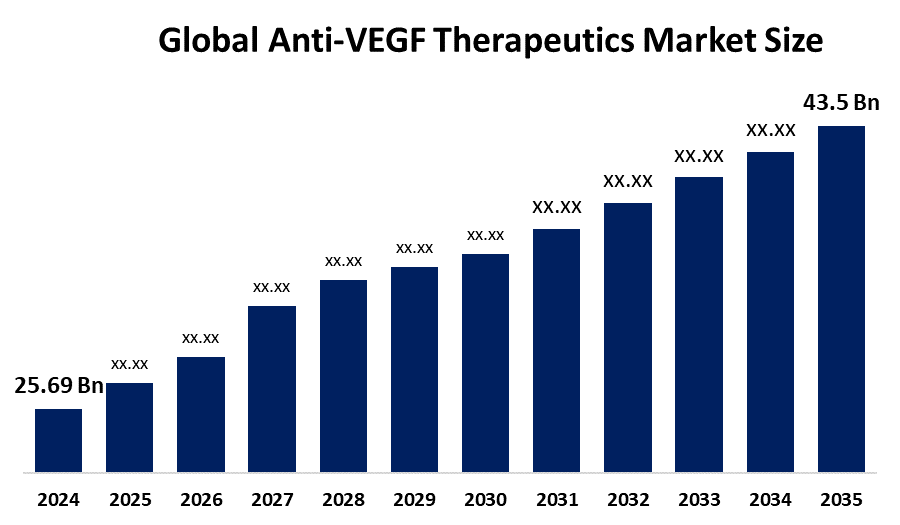
• The market size for the anti-VEGF therapeutics market was estimated to be worth USD 25.69 Billion in 2024.
• The market size is going to expand at a CAGR of 4.9% between 2025 and 2035.
• The global anti-VEGF therapeutics market size is anticipated to reach USD 43.5 Billion by 2035.
• Asia Pacific is estimated to generate the highest demand during the forecast period in the global anti-VEGF therapeutics market.
• North America is projected to grow the fastest during the forecast period in the global anti-VEGF therapeutics market.
Regional Growth and Demand
Asia Pacific is expected to grow the fastest during the forecast period in the anti-VEGF therapeutics market. This is due to the rising prevalence of retinal disorders such as wet AMD, diabetic retinopathy, and diabetic macular edema, coupled with a rapidly aging population. The expanding healthcare infrastructure, increasing awareness of advanced ophthalmic treatments, government initiatives to improve eye care, and the growing adoption of innovative therapies like extended-durability agents, sustained-release implants, and biosimilars are key factors driving robust market growth in the region. China’s ophthalmic drug market is rapidly expanding, with anti-VEGF therapies projected to grow at over 23% CAGR from 2025–2030, driven by rising retinal disease prevalence, government healthcare investments, and regulatory approvals.
North America is anticipated to generate the highest demand during the forecast period in the anti-VEGF therapeutics market. This is due to the presence of well-developed healthcare infrastructure, high healthcare expenditure, and strong reimbursement policies. The patient pool for retinal diseases such as wet AMD, DME, and RVO is high in the region. In addition, the high rate of clinical awareness, strong acceptance of novel treatments, and the availability of advanced drug delivery systems will ensure continued use of anti-VEGF agents. The U.S. FDA approved EYDENZELT (aflibercept-boav), a biosimilar to EYLEA, for wet AMD, DME, RVO, and diabetic retinopathy, expanding anti-VEGF treatment options and reinforcing North America’s market leadership.
Top 10 Trends in the Anti-VEGF Therapeutics Market
• Shift to Longer-Acting Agents
• Rapid Adoption of Faricimab
• Introduction of High-Dose Formulations
• Rise of Biosimilars and Generic Competition
• Increasing Use of Bispecific Antibodies
• Treat-and-Extend Protocols
• Growing Role of Gene Therapy
• Targeting Complement Factors for Geographic Atrophy
• AI and Digital Health Integration
• Increasing Prevalence of Retinal Diseases
Unlock exclusive market insights— Download the Brochure now and dive deeper into the future of the Global Articaine Hydrochloride Market.
-
Shift to Longer-Acting Agents
The shift from monthly injections to medications that last three to four months is a significant trend that reduces the treatment burden on patients.
-
Rapid Adoption of Faricimab
Vabysmo, the first bispecific antibody for the eye, is quickly gaining traction in the market and generated more than $1 billion in its first year after launch.
-
Introduction of High-Dose Formulations
High-dose alternatives like Eylea HD (aflibercept 8 mg) promise similar effectiveness to conventional therapy while requiring fewer injections.
-
Rise of Biosimilars and Generic Competition
As the patents for popular medications like Avastin (bevacizumab) and Lucentis (ranibizumab) expire, the market is witnessing an increase in lower-cost biosimilars, boosting competition and reducing treatment costs.
-
Increasing Use of Bispecific Antibodies
New treatments like Faricimab, which targets both VEGF and angiopoietin-2 (Ang-2), are transforming the therapeutic landscape for complex retinal diseases by targeting more than just VEGF-A.
Top 15 Companies Leading the Anti-VEGF Therapeutics Market
-
Regeneron Pharmaceuticals, Inc.
Headquarters: Tarrytown, New York, United States.
Regeneron Pharmaceuticals, Inc. was founded in 1988 and has around 15,410 employees worldwide. The company generates revenue of around USD 14.34 billion in 2025 due to its strong portfolio in biologics. The anti-VEGF drug applications from Regeneron include its flagship retinal disease treatment drugs EYLEA and EYLEA HD, which are widely used to treat wet AMD, DME, retinal vein occlusion, and diabetic retinopathy. Regeneron’s commitment to advanced ophthalmic biologics and sustained-efficacy drugs makes it a leader in the industry. -
Roche Holding AG (Genentech)
Headquarters: Basel, Switzerland.
Roche Holding AG was established in 1896 and employs over 100,000 people worldwide across pharmaceuticals and diagnostics. In 2025, Roche reported group revenues of approximately CHF 61.5 billion (USD 67 billion). Its anti-VEGF applications include Vabysmo (faricimab) for wet AMD, diabetic macular edema, and other retinal diseases, alongside other ophthalmic and oncology biologics. Roche’s extensive pipeline and strong global presence strengthen its leadership in innovative VEGF-targeting therapies. -
Novartis AG
Headquarters: Basel, Switzerland.
Novartis AG was established in 1996 through the merger of Ciba-Geigy and Sandoz. The firm achieved USD 54.5 billion in revenue during 2025 while maintaining a workforce of approximately 75,267 employees globally. The company has developed Beovu (brolucizumab), a next-generation anti-VEGF-A therapy used to treat wet age-related macular degeneration and diabetic macular edema while offering vision improvement and extended treatment duration. -
Bayer AG
Headquarters: Leverkusen, Germany.
Bayer AG began operations in 1863. With a workforce ranging from 88,000 to 94,000 employees, the company is expected to generate revenues of around USD 49 billion by 2025. Bayer operates in the anti-VEGF therapeutics segment by developing and marketing Eylea (aflibercept) outside the United States through its partnership with Regeneron to treat wet AMD, DME, and other retinal diseases by inhibiting VEGF-driven neovascularization and leakage. -
Pfizer, Inc.
Headquarters: New York, United States.
Pfizer, Inc. was established in 1849 and currently employs about 81,000 staff worldwide. In 2025, Pfizer recorded revenue of approximately USD 62.0–62.6 billion, reflecting strong performance in the biopharmaceutical sector. Although Pfizer is not a leading marketer of approved ophthalmic anti-VEGF products, its pipeline includes VEGF-targeting research collaborations and biologics that contribute to innovation in retinal and oncology therapies.
Unlock exclusive market insights— Download the Brochure now and dive deeper into the future of the Global Articaine Hydrochloride Market.
Are You Ready to Discover More About the Anti-VEGF Therapeutics Market?
The report provides an in-depth analysis of the leading companies operating in the global anti-VEGF therapeutics market. It includes a comparative assessment based on their product portfolios, business overviews, geographical footprint, strategic initiatives, market segment share, and SWOT analysis. Each company is profiled using a standardized format that includes:
Company Profiles
-
Regeneron Pharmaceuticals, Inc.
• Business Overview
• Company Snapshot
• Products Overview
• Company Market Share Analysis
• Company Coverage Portfolio
• Financial Analysis
• Recent Developments
• Mergers and Acquisitions
• SWOT Analysis -
Roche Holding AG (Genentech)
-
Novartis AG
-
Bayer AG
-
Pfizer, Inc.
-
Amgen Inc.
-
Samsung Bioepis Co., Ltd.
-
Biogen Inc.
-
Bausch Health Companies, Inc.
-
Santen Pharmaceutical Co., Ltd.
-
Alcon Inc.
-
Coherus BioSciences, Inc.
-
Eli Lilly and Company
-
Teva Pharmaceutical Industries Ltd.
-
Iveric Bio, Inc.
Unlock exclusive market insights— Download the Brochure now and dive deeper into the future of the Global Articaine Hydrochloride Market.
Our Reports:
https://www.sphericalinsights.com/reports/belgium-hydrogen-peroxide-market
https://www.sphericalinsights.com/reports/canada-isopropyl-alcohol-ipa-market
https://www.sphericalinsights.com/admin-panel/reports/edit
https://www.sphericalinsights.com/reports/china-bunker-fuel-market
Conclusion
The global Anti-VEGF therapeutics market is growing at a rapid rate and is expected to rise from USD 25.69 billion in 2024 to USD 43.5 billion in 2035 at a CAGR of 4.9%. This is due to the rising incidence of retinal diseases like wet AMD, DME, and RVO, and the overall population growth rate. Anti-VEGF drugs have shown tremendous potential in treating eye diseases and cancers. The new technologies like extended durability agents, high-dose agents, sustained release implants, bispecific agents, and gene therapy have improved efficacy and reduced dosing frequency. In terms of geographic distribution, the Asia Pacific region is growing at the highest rate and is followed by North America in terms of demand. In anti-VEGF drugs have dominated the global anti-VEGF therapeutics market with key players like Regeneron, Roche, Novartis, Bayer, and Pfizer. These companies have shown tremendous potential in the production of anti-VEGF drugs and biosimilars and next-generation anti-VEGF drugs. Overall, it is expected that the anti-VEGF therapeutics market will grow at a rapid rate in the coming years.
About the Spherical Insights & Consulting
Spherical Insights & Consulting is a market research and consulting firm which provides actionable market research study, quantitative forecasting and trends analysis provides forward-looking insight especially designed for decision makers and aids ROI.
Which is catering to different industry such as financial sectors, industrial sectors, government organizations, universities, non-profits and corporations. The company's mission is to work with businesses to achieve business objectives and maintain strategic improvements.
CONTACT US:
For More Information on Your Target Market, Please Contact Us Below:
Phone: +1 303 800 4326 (the U.S.)
Phone: +91 90289 24100 (APAC)
Email: inquiry@sphericalinsights.com, sales@sphericalinsights.com
Contact Us: https://www.sphericalinsights.com/contact-us
Follow Us: LinkedIn | Facebook | Twitter
Need help to buy this report?